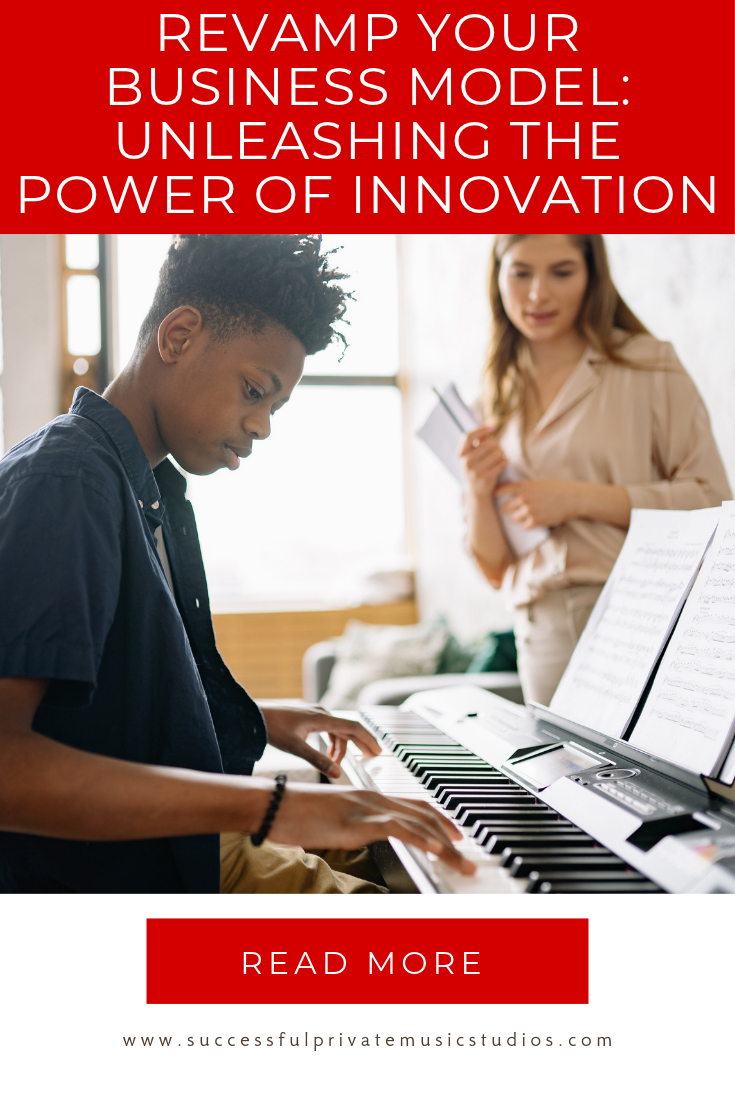
One of the best things about running a private music studio is that the business model is entirely yours to design.
You're not punching a clock. You're not limited to one income stream. You're not locked into teaching the same way every other music teacher does. Private music teaching is already an unconventional career — and the teachers who thrive long-term are the ones who lean into that unconventionality and build something that genuinely fits their life.
If your studio feels like it's running on one track — same format, same schedule, same single income stream — here are four ways to innovate and build something more flexible, more profitable, and more sustainable.
1. Add Online Lessons to Your Teaching Mix
Online lessons aren't just a backup plan for when something goes wrong. For many teachers, they've become a permanent and preferred part of their schedule — and for good reason.
Teaching online removes the geographic limit on your studio. You can take students who are 30 minutes away, students who travel frequently, or students in other states entirely. You can fill a cancellation slot in minutes by switching a local student to Zoom. And you can build a consistent schedule that doesn't depend on weather, traffic, or whether a student's parents can drive.
The teachers who resist online lessons most are usually the ones who haven't set it up properly. Once you have a reliable platform, clear expectations in your studio policy, and a few lessons under your belt, most teachers find they enjoy it more than they expected.
The key is treating online lessons with the same structure and professionalism as in-person teaching — not as a lesser option, but as a different format with its own strengths.
Set Up Online Lessons the Right Way
How to Easily Transition to Teaching Online Music Lessons
Platform setup, camera and audio tips, how to set expectations with families, and the teaching adjustments that make online lessons as effective as in-person — all covered in this free guide.
Read the Guide →2. Offer Group Lessons
Group lessons are one of the most underused income opportunities in private music teaching — and the math makes them hard to ignore.
A weekly group lesson with 5 students at $100 per student per month generates $500 from a single hour of teaching. Teach three group classes per week and you're looking at $1,500 per month from just three hours of instruction time. Compare that to what those same hours would earn in private lessons and the difference is significant.
Group lessons work especially well for:
Beginning piano — students at the same level learning notation, simple pieces, and basic technique together
Guitar — chord-based beginner groups are popular with teens and adults
Violin and string instruments — Suzuki-inspired group classes are well-established and families expect them
Music theory — a weekly theory group supplements private lessons for multiple students simultaneously
Homeschool co-ops — homeschool families are actively looking for group music instruction and often come in built-in groups
You don't need a large studio space to start. A living room with enough chairs, a digital piano, and four to six students is enough to run a successful beginner group. Start with one class slot, fill it, and add more from there.
3. Create Online Courses or Subscription Content
This is the income stream with the highest leverage — you build it once and it earns continuously.
The idea is straightforward: record a series of lessons or tutorials on a specific topic, package them as a course or subscription, and make them available to anyone — not just your local students.
Topics that translate well to online course format:
Beginner instrument fundamentals (how to read music, basic technique, first songs)
Music theory foundations
Practice strategies for students and parents
Instrument-specific tutorials (scales, etudes, specific repertoire)
Parent guides for supporting music practice at home
Platforms like Teachable, Kajabi, or even a simple Squarespace members area make it relatively straightforward to host and sell course content. You don't need a professional recording setup — a decent USB microphone, good lighting, and a quiet room is enough to produce content that sells.
The key is starting narrow. Pick one specific topic, record 6–8 short lessons, and get it out into the world. You'll learn more from selling your first course than from spending months perfecting a curriculum nobody has seen yet.
Grow Beyond Private Lessons
Unleash Your Income Potential: New Revenue Streams for Music Teachers
A full breakdown of the income streams available to private music teachers — beyond the hourly lesson. Digital products, group classes, online courses, and more — with real numbers and where to start.
Read the Post →4. Offer Workshops, Masterclasses, and Clinics
Your expertise as a musician and teacher extends well beyond your weekly private lesson schedule — and there are organizations actively looking for exactly what you offer.
School masterclasses. Reach out to the music directors at local middle and high schools and let them know you're available to run instrument-specific masterclasses for their students. A 45–60 minute clinic for a school band or orchestra section is a well-established format that many school teachers welcome, especially for instruments they don't specialize in themselves. Set your clinician rate, reach out professionally, and follow up.
Senior center workshops. Senior centers are consistently underprogrammed for music instruction and many actively seek community musicians to lead beginner workshops. A 6-week "Intro to [Instrument]" workshop for adult beginners is a natural fit — and a population that is enthusiastic, consistent, and deeply appreciative.
Studio workshops for your own students. Host a technique workshop, a music theory intensive, or a performance prep session for your existing students as a supplemental offering. Charge a flat fee per student for a 90-minute session. It deepens your teaching relationship, generates additional income, and gives students a valuable experience outside the regular weekly lesson format.
Online workshops. Everything above can also be done virtually — which dramatically expands your potential audience. A two-hour online workshop on piano technique fundamentals or music theory for beginners can be offered to students anywhere, recorded for future sale, and promoted through your existing blog and Pinterest audience.
Your studio doesn't have to be one teacher, one student, one hour at a time. The most successful private music teachers build income streams that stack — private lessons as the foundation, with group classes, online content, and workshops adding layers on top.
You don't have to build all of it at once. Pick one idea from this list, commit to it for 90 days, and see what happens. The teachers who grow are the ones who start before they feel ready.
Happy Teaching!
Becky
The Complete Roadmap
Successful Music Studio Strategies — Signature Course
Income growth, online teaching, group lessons, marketing, student retention, bookkeeping — the Signature Course covers all of it across 59 lessons. The complete system for building a private music studio that's profitable, sustainable, and built around your life.
$1,250 · or 3 payments of $500
Learn More →Keep the momentum going
What do you need next?
⭐ Most Relevant
🎓 Build a Studio That Runs Like a Business
Signature Course · $1,250 · 59 lessons · Everything to launch & grow →
🚀 Part 3 — Making Your Studio Thrive
À La Carte · $500 · Marketing, growth, recitals & income →
🗺️ Build Your Studio Foundation First
Startup Toolkit · $50 · Business plan, pricing & branding →
🗺️ Not Sure Where to Start?
Free · 2 minutes · Start Here page →