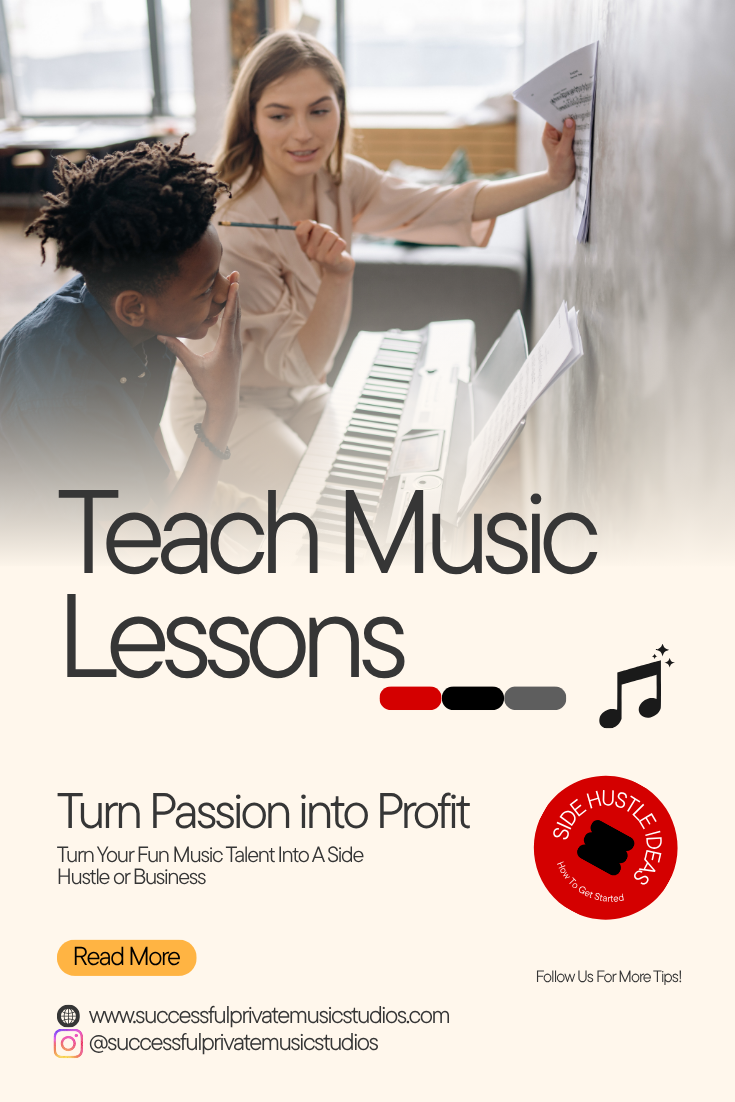
Turn Your Fun Habit Into A Side Hustle or Business

I play French horn with The Charlottesville Band — an 80-piece ensemble filled with talented adult musicians who show up every week because they love music. Retired teachers, engineers, stay-at-home parents, people between jobs, people who love what they do but want something more on the side.
And almost none of them teach lessons.
When I talk to fellow musicians who are retired, looking for supplemental income, or just wondering what to do with the skill they've spent decades developing — the first thing I ask is: have you ever thought about teaching?
Most of them look at me like I suggested something outrageous. But here's the truth: if you play an instrument at an intermediate level or higher, you are already qualified to teach beginners. You don't need a music education degree. You don't need a studio space. You don't need a website or a business plan on day one.
You just need to start.
Why Teaching Makes Sense as a Side Hustle
The math alone is compelling. If you teach just 4 students at $80–$100 per month, that's $320–$400 in income from 4 hours of teaching per week. Scale that to 10 students and you're looking at $800–$1,000 a month from roughly 10 hours of work — doing something you already know how to do.
And unlike most side hustles, private music teaching compounds over time. Students who start as beginners stay for years. Families refer their friends. Your schedule fills through word of mouth before you ever spend a dollar on advertising.
It's one of the few side hustles where the better you get at it, the less you have to hustle.
5 Steps to Get Started Teaching Music Lessons
1. Decide what levels you're comfortable teaching.
You don't have to teach advanced students right away. Most musicians with intermediate skills or higher can confidently teach beginners — and beginners are always the largest portion of the market. Start there and build from experience.
2. Choose your method books.
Don't overthink this. Pick a reputable method book series and stick with it. For piano, Faber & Faber Piano Adventures and Alfred's Basic Piano Library are both widely used and well-structured. For other instruments, ask a local music teacher what they use and start there. Having a clear curriculum makes your first lessons feel organized and professional — for you and your students.
3. Decide your schedule and student capacity.
How many days a week do you want to teach? How many hours? If you teach two afternoons a week for two hours each, that's four 30-minute lessons per session — eight students total. That's a meaningful income from a very manageable time commitment.
Your schedule determines your capacity, so be intentional about it from the beginning. It's much easier to add students later than to scale back a schedule that's already overloaded.
4. Decide where you'll teach.
You have more options than you might think. Teaching from home is the most common choice, but you can also travel to students' homes, rent space at a local music store, or use a church, community center, or other venue. Each option has trade-offs in cost, convenience, and professionalism — choose the one that fits your current situation and adjust as your studio grows.
5. Spread the word and get your first student.
Post a flyer at your local music store, library, or community board. Tell friends and family you're taking students. Post in a neighborhood Facebook group or Nextdoor. Your first student almost always comes from someone you already know — and from there, word of mouth takes over.
Your Complete Starting Point
Music Studio Startup Toolkit
This 65-page toolkit walks you through every foundational decision — business plan, pricing, branding, studio policies, and a 30-day launch roadmap — so you walk into your first lesson with a real plan, not just a hope. If you're ready to turn your musical skill into a real studio business, start here.
$50 · one-time · instant download
Get the Toolkit →Before Your First Student Walks In the Door
Getting students is only half the equation. The other half is setting up your studio like a business from day one — because the habits you build at the start are the ones you'll carry forward.
Two things every new music teacher needs before that first lesson:
A studio policy. This is the document that sets expectations around tuition, cancellations, scheduling, communication, and what happens when things don't go as planned. Without it, you're running on assumptions — and assumptions are where income inconsistency and difficult conversations come from. Get it in writing before you need it.
A simple bookkeeping system. You are now a business owner. That means tracking income, keeping records for taxes, and knowing exactly what your studio earns each month. This doesn't have to be complicated — but it does have to be consistent from the beginning. Starting organized is infinitely easier than trying to untangle a year's worth of records in April.
Done-for-You Templates
Successful Music Studio Policy Templates
Don't write your policy from scratch. These fully customizable templates are already written — covering tuition, cancellations, scheduling, communication, and more. Includes a step-by-step tutorial video to help you customize everything to fit your studio. Two options depending on where you are in your journey.
Advanced adds income growth strategies, student retention, and referral incentive sections.
Ready to Go Beyond the Side Hustle?
Teaching a handful of students is a great start. But if you want to build a studio that's fully booked, consistently profitable, and runs like a real business — that takes a different level of intention.
I've been teaching since I was a junior in high school. I've built my studio twice from scratch after major relocations, reaching full capacity with a waitlist within three months each time. Everything I've learned in nearly three decades of teaching is inside the Signature Course — the complete roadmap for private music teachers who are ready to stop winging it and start building something that lasts.
The Complete Roadmap
Successful Music Studio Strategies — Signature Course
59 lessons covering everything from pricing and branding to student retention, bookkeeping, recitals, and income growth. Built for private music teachers who want a studio that's full, profitable, and sustainable — on their own terms.
$1,250 · or 3 payments of $500
Learn More →You won't know unless you try. And the best time to start is now — before your schedule fills up with everything else, before another year goes by, before another musician in your ensemble tells you they wished they'd started teaching sooner.
Your instrument is already in your hands. The students are out there waiting.
Happy Teaching,
Becky
Keep the momentum going
What do you need help with next?
⭐ Start Here
🗺️ Launch Your Studio
Startup Toolkit · $50 · Business plan, pricing, branding & 30-day roadmap →
📄 Get Your Studio Policy Done
Done-for-You Templates · from $125 · Ready to customize & sign →
🎓 Build a Studio That Runs Like a Business
Signature Course · 59 lessons · Everything to launch & grow →
🗺️ Not Sure Where to Start?
Free · 2 minutes · Start Here page →