How to Keep Music Students Coming Back Year After Year
Here's a truth that took me a while to fully accept: a student who quits isn't always a student who didn't like music. Sometimes they quit because they didn't feel connected — to the lessons, to their progress, or to you as their teacher.
Retention isn't just about being a good teacher. It's about building a studio experience that students and families don't want to leave. After nearly 30 years of teaching, here's what I've learned actually makes the difference.
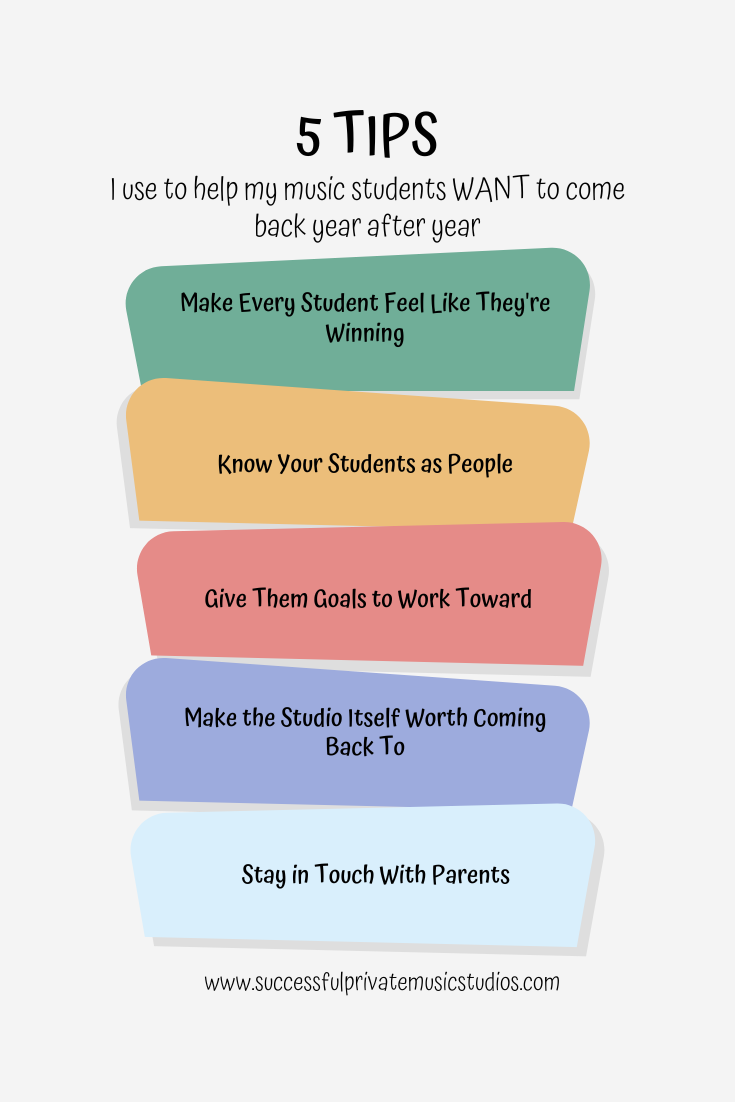
Make Every Student Feel Like They're Winning
Students who feel successful keep coming back. Students who feel like they're always behind eventually stop showing up.
This doesn't mean lowering your standards — it means being intentional about how you frame progress. Even in a lesson where nothing went perfectly, find the one thing that got better and name it. "Your left hand was so much steadier today than last week." That moment of recognition sticks. It's what they tell their parents on the way home.
Younger students especially need to feel a win at every single lesson. Build your lesson structure so they always end on something they can do well — not something they're still struggling with.
Know Your Students as People
Ask about their week. Remember that they had a soccer tournament. Notice when they seem off and give them a little grace. Students stay with teachers they feel seen by — not just instructed by.
This is one of the easiest things to do and one of the most overlooked. You don't need to be their therapist or their best friend. You just need to be a person who pays attention. That alone sets you apart from most teachers they'll ever have.
Build Your Studio Foundation
Music Studio Startup Toolkit
New to studio ownership? The Startup Toolkit covers your business plan, pricing, studio policy basics, branding, and a full 30-day launch roadmap — 65 pages built for teachers who want to start strong and stay organized from day one.
$50 one-time · instant download
Get the Toolkit →Give Them Goals to Work Toward
Students who are working toward something specific practice more and quit less. It doesn't have to be a big competition or a formal audition — it can be as simple as "let's get this piece performance-ready by the recital" or "your goal this month is to play your scales hands together without stopping."
Write the goal down. Put it in their assignment book. Check in on it the following week. That small layer of accountability creates a sense of forward momentum that keeps lessons feeling purposeful instead of repetitive.
Make the Studio Itself Worth Coming Back To
I've said it before and I'll keep saying it: the candy bowl works. So does decorating for holidays. So does the Halloween week lesson and the Christmas ornament gift and the sticker chart with the prize box. These things seem small, but they create a studio culture that students genuinely look forward to.
Your lesson room should feel like a place — not just a transaction. When students walk in and feel something, they come back.
Stay in Touch With Parents
The families most likely to quietly disappear are the ones who feel out of the loop. A short monthly email, a quick progress note at the end of a lesson, a heads-up before recital season — these touchpoints remind parents that you're invested in their child's growth, not just filling a time slot.
You don't need to over-communicate. You just need to communicate enough that parents feel informed and connected. When they feel like partners in the process, they keep their kids enrolled.
Want the Complete System?
Successful Music Studio Strategies — Signature Course
Student retention, parent communication, curriculum planning, recitals, income growth — all of it, in 59 lessons. This is the deep-dive resource for teachers who are ready to build a studio that truly thrives year after year.
$1,250 or 3 payments of $500
Learn More →Retention isn't a mystery. It's a collection of small, consistent choices that add up to a studio experience families don't want to give up. Start with one thing on this list and build from there.
Happy Teaching!
Becky
What do you want to tackle next?
Here are the best next steps depending on where you are right now.