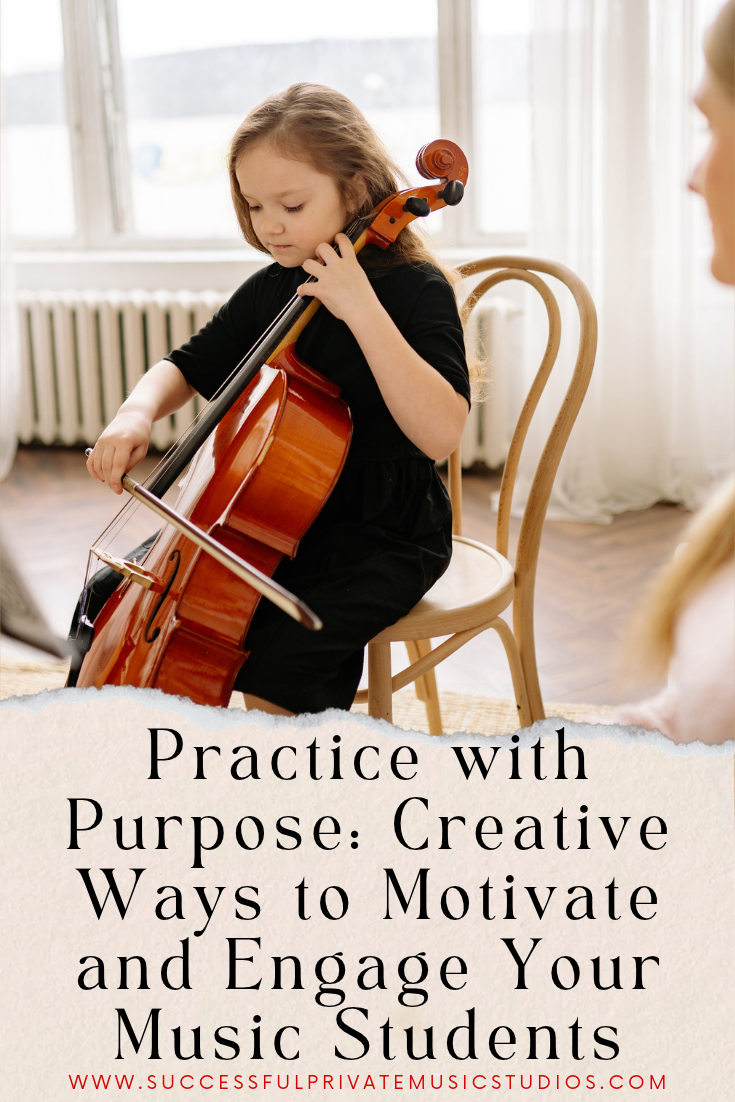
Practicing is the cornerstone of musical progress — but keeping students motivated to actually do it consistently is one of the biggest challenges in private music teaching.
The good news: motivation isn't something students either have or don't have. It's something you can build, shape, and sustain with the right strategies in place. When students practice with purpose and enthusiasm, they make meaningful progress and develop a genuine love for music that outlasts their time in your studio.
Here are six ways to make practicing something your students actually want to do.
1. Gamify the Practice Experience
Games work because they make effort feel rewarding in real time — and that's exactly what consistent practicing needs.
Weekly and monthly challenges. Create structured challenges with a clear goal: master a tricky passage, play a piece correctly three times in a row, or practice every day for two weeks. Pair the challenge with a small tangible reward — a sticker, a certificate, a choice of repertoire for the next lesson — and watch how quickly students start tracking their own progress.
Visual progress charts. There's something uniquely satisfying about filling in a chart. A simple weekly practice log where students color in each day they practiced gives them a visual record of their own consistency. Over time they'll start competing against themselves.
Practice Bingo. Design a bingo card with specific practice tasks: "Play the whole piece from memory," "Practice hands separately for 10 minutes," "Record yourself and listen back." Completing a bingo earns a reward. Students who would resist a plain practice assignment will enthusiastically pursue the same work when it's framed as a game.
A done-for-you practice challenge — complete with tracking tools, student materials, and everything you need to run it in your studio — is exactly what the Practice Challenge Kits are designed for.
Done-for-You Practice Challenge
Holiday Practice Challenge Kit
A completely done-for-you practice challenge — structured daily goals, a visual tracker, and everything you need to keep students consistent and motivated. Just print and hand out. Perfect for keeping students on track through the holiday season when consistency is hardest to maintain.
Get the Holiday Challenge Kit →2. Personalize the Journey
Every student is unique — and the fastest way to kill motivation is to make practice feel generic.
Let students choose their repertoire. When students are working on music they actually love, practicing stops feeling like homework. Ask them what they're listening to, what songs they wish they could play, what musicians they admire. When possible, work those preferences into their repertoire. A student who is practicing because they want to play their favorite song is a completely different kind of student than one who is working through the next page of a method book because you assigned it.
Creative assignments. Encourage students to compose a short original piece, write their own variation on something they've learned, or arrange a simple melody they know. Creative work builds a personal relationship with the instrument that assigned pieces alone can't replicate.
Student-driven goals. Let students name what they're working toward — a specific piece, a technique, a performance. When the goal is theirs, the motivation to reach it is theirs too. Check in on those goals at lessons and celebrate when they hit them.
3. Incorporate Technology
The tools your students are already using in the rest of their lives can make practice more interactive, more trackable, and more fun.
Practice apps. Apps like Tonara, Piano Maestro, and Simply Piano provide real-time feedback, progress tracking, and built-in rewards that make practicing feel like a game. For younger students especially, these apps can bridge the gap between lesson time and home practice in a way that a plain practice log can't.
Recording sessions. Have students record themselves playing their current piece — just on a phone, nothing fancy. Listening back does two things: it helps them hear things they miss while playing, and it gives them a tangible record of their own progress over time. A student who can compare a recording from September to one from December has a powerful source of motivation that no amount of encouraging words can replicate.
Virtual collaborations. Pair students for online duet sessions, virtual recital prep calls, or recorded performances they can share with family. When students know someone else will hear them play, their relationship with practicing changes entirely.
Keep Your Studio Running Smoothly
Part 2 — Keeping Your Studio Running
Student motivation, practice systems, parent communication, scheduling, and the organizational strategies that keep your studio running smoothly week after week. Everything you need to keep your studio consistent and your students engaged.
$500 · lifetime access
Get Part 2 →4. Celebrate Achievements
Recognition is one of the most powerful — and most underused — motivators in private music teaching.
Practice awards. Hand out simple awards for consistency, improvement, or creative effort. It doesn't need to be elaborate — a printed certificate, a sticker, a special mention at the next lesson. The act of being recognized publicly for effort creates a positive association with the work that led to it.
Showcase their progress. Create regular opportunities for students to share what they've learned — recitals, studio showcase nights, even short performance videos for families. When students know their practicing is leading toward something they'll perform, the practice itself feels purposeful rather than arbitrary.
Celebrate milestones. When a student finishes a method book, masters a challenging piece, or hits a personal goal they set themselves — make a moment of it. These milestones matter. Acknowledging them tells students that their effort was seen and that progress is worth celebrating.
5. Foster a Growth Mindset
How students think about their mistakes has a bigger impact on their progress than almost anything else you teach them.
Praise effort, not just results. "You worked really hard on that section today" lands differently than "that was perfect." Students who are praised for effort learn to value the process of getting better — which is exactly the mindset that leads to consistent practicing.
Teach them how to practice, not just what to practice. Most students who don't practice consistently aren't lazy — they don't know what to do when they get stuck. Teach them to isolate the hard measure, slow it down, practice it three times correctly before moving on. Give them a strategy they can use independently and they'll practice with far more confidence.
Keep it joyful. Music is about expression and enjoyment. When a student is visibly frustrated, sometimes the best thing you can do is set the assignment aside and just play something fun together. A student who leaves a lesson feeling good about music is more likely to sit down at the instrument before next week than one who leaves feeling defeated.
6. Get Families Involved
The most consistent practicers almost always have a parent who is engaged, informed, and present.
Invite parents into practice time. Encourage parents to be present during home practice — not to correct or direct, but just to listen. A child who is performing for their parent practices differently than one who is alone in a room. Even five minutes of "can you play that for me?" from a parent changes the dynamic entirely.
Practice logs with parent notes. Provide a simple weekly practice log with a column for parents to leave observations or encouraging notes. This keeps parents connected to what their child is working on and signals that practicing is a shared family priority, not just a school assignment.
Informal home performances. Encourage students to play for family members at home — grandparents, siblings, family friends. These low-stakes performances build performing confidence in a way that formal recitals can't fully replicate, and they give students a reason to prepare something they're proud of.
Engaging students in consistent, purposeful practice doesn't happen by accident — but it also doesn't require a complete overhaul of how you teach. Start with one strategy from this list. Try it for a month. See what shifts.
The goal isn't perfect practice every week. The goal is a student who has a genuine, personal relationship with their instrument — one that outlasts their lessons with you and lasts a lifetime.
Happy Teaching!
Becky
Ready to Build a Studio That Runs Like a Business?
Successful Music Studio Strategies — Signature Course
Student motivation, practice systems, parent communication, recitals, policies, bookkeeping, income growth — the Signature Course covers all of it across 59 lessons. The complete roadmap for building a thriving private music studio.
$1,250 · or 3 payments of $500
Learn More →Keep the momentum going
What do you need next?
⭐ Most Relevant
🎄 Holiday Practice Challenge Kit
Done-for-you · Keep students on track through December →
🌸 Spring Practice Challenge Kit
Set 1 · $37.50 · Done-for-you · Spring recital prep →
🎓 Keep Your Studio Running
Part 2 Course · $500 · Systems, motivation & retention →
🗺️ Not Sure Where to Start?
Free · 2 minutes · Start Here page →