

Post Categories: What do you need help with?
Starting Your Studio
Keep Your Studio Running
Making Your Studio Thrive
From Branding to Social Media: Tips to Take Your Music Teaching Business to the Next Level
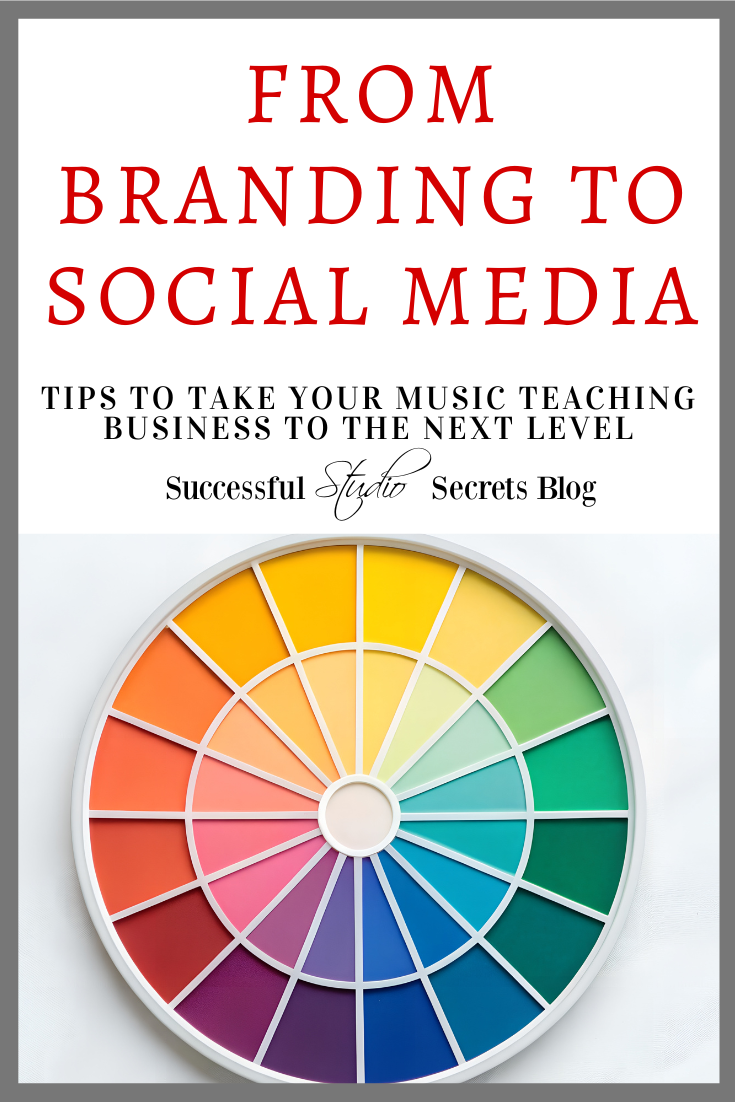
If you’re ready to grow your private music studio this year, there’s one truth you can’t ignore: great teaching is essential, but it’s not the only thing that builds a thriving business.
Your brand identity, your online presence, and the way you show up on social media all work together to shape how families see your studio — long before they ever reach out.
The good news? You don’t need to be a marketing expert to create a studio that feels polished, professional, and uniquely you. With a few intentional steps, you can elevate your studio’s visibility and attract the right students with confidence.
Let’s walk through the essentials.
1. Start With a Clear Brand Identity
Your brand identity is the foundation of your studio’s presence — online and offline. It’s the personality of your business and the promise you make to families.
A strong brand identity includes:
A clear studio name
A consistent color palette and font style
A recognizable logo
A defined teaching philosophy
A tone of voice that reflects your values
A cohesive experience across your website, emails, and social media
When these elements work together, your studio becomes instantly recognizable. Families feel a sense of trust and clarity — and that’s what leads to inquiries and enrollments.
Pro tip: If your studio feels “all over the place,” start by defining three words that describe the experience you want families to have. Warm? Structured? Creative? High‑achieving? Those words become your compass for every branding decision.
2. Make Your Online Presence Consistent and Inviting
Once your brand identity is clear, your next step is making sure it shows up everywhere families interact with you.
That includes:
Your website
Your social media profiles
Your email signature
Your studio policies and welcome packet
Your lesson materials and handouts
Consistency builds trust. When a parent sees the same colors, tone, and message across platforms, they instantly feel like your studio is organized, reliable, and professional.
Ask yourself: Does my online presence reflect the studio experience I want to deliver?
If not, this is the perfect time to refresh and realign.
3. Use Social Media With Intention (Not Exhaustion)
Social media doesn’t have to be overwhelming — especially when you use it strategically.
Here are simple ways to make it work for your studio:
Share content that reflects your brand
If your brand is warm and encouraging, share behind‑the‑scenes moments, student wins, and motivational posts. If your brand is structured and achievement‑focused, highlight practice strategies, progress milestones, and performance prep.
Post consistently — even once a week makes a difference
You don’t need daily content. You just need predictable, steady visibility.
Use captions that speak to parents’ needs
Parents want to know:
What their child will experience
How you support learning
Why your studio is a great fit
Your captions can answer those questions naturally.
Repurpose content to save time
One blog post can become:
3–5 Instagram posts
A Facebook update
A short video
A newsletter segment
You’re not creating more — you’re using what you already have.
4. Build a Studio Presence That Feels Like You
The most successful studios aren’t the ones with the fanciest graphics or the biggest social media following. They’re the ones with a clear identity and a consistent message.
When your branding and social media work together, you create a studio that feels cohesive, trustworthy, and memorable. And that’s what helps families choose you over the dozens of other options in your area.
A Quiet Hint… Something Big Is Coming
If you’re reading this and thinking, “I want to do all of this, but I need a roadmap,” you’re going to love what’s coming next.
The Music Studio Startup Toolkit is about to launch — and it includes an entire section on brand identity, plus templates, scripts, and social media tools to help you build a studio presence that feels polished and professional from day one.
If you want to take your studio to the next level this year, keep your eyes open. The next launch is right around the corner.
Happy Teaching!
Becky
How to Choose Colors, Fonts & a Logo for Your Music Studio

I want to be upfront with you: when I first picked my studio's colors, I chose them because I liked them. That's it. No strategy, no research, no thought about what they communicated to potential students and families.
It worked out fine — but I got lucky. And "getting lucky" isn't a business strategy.
If you're starting your studio, rebranding, or just realizing your current visual look is kind of all over the place, this post is for you. Let's talk about how to make intentional visual choices that actually reflect your studio's personality and attract the right students.
Start With Feeling, Not Aesthetics
Before you open Canva or start browsing logo templates, ask yourself: what do I want families to feel when they see my studio's brand?
Energized and excited? You might lean toward bold, saturated colors.
Calm and nurturing? Softer tones, warmer neutrals.
Sophisticated and serious? Deep jewel tones, clean typography.
Fun and playful? Brighter palette, friendlier fonts.
There are no wrong answers here — as long as your answer matches what you actually deliver in the lesson room. Your brand is a promise. Make sure it's a promise you can keep.
Just Getting Started?
Music Studio Startup Toolkit
If you're launching a new studio and want a clear framework for everything — pricing, policies, branding, and a full 30-day launch roadmap — this is your starting point. 65 pages. Instant download.
$50 · one-time · instant download
Get the Toolkit →Choosing Your Color Palette
For a small business like a private music studio, you really only need:
1 primary color — this is your signature, the one that shows up everywhere
1–2 accent colors — these complement your primary and add variety
Neutrals — black, white, or a soft gray to balance everything out
A few practical tips:
Keep it to 3–4 colors total. More than that and things start to feel cluttered and inconsistent.
Check contrast. Make sure your text is readable against your background colors. Dark text on light backgrounds (or vice versa) is almost always the safest call.
Look at what you're already drawn to. Your existing wardrobe, your home décor, your favorite Instagram accounts — these are clues about what feels authentically "you."
Look at what the competition is doing. Not to copy, but to differentiate. If every music teacher in your area uses navy blue and gold, there might be a case for going a different direction.
Choosing Your Fonts
You only need two fonts: one for headlines, one for body text. That's it.
Headline font: Can have more personality — a serif, a script, something with character. This is where your brand voice starts to show visually.
Body font: Should be clean and very easy to read. Save the personality for headlines; body text needs to be functional.
Free sources: Google Fonts has hundreds of beautiful, professional options. Canva also has a solid library built in.
One rule: don't use more than two fonts in any single design. When in doubt, simpler is always better.
Limited Time
Holiday Challenge Kit — Set 1
Keep your students engaged and motivated through the holiday season with this ready-to-use challenge kit. Everything you need to run a fun, structured holiday practice challenge in your studio — done for you.
Get the Holiday Kit →Your Logo: Keep It Simple
A logo doesn't have to be complicated to be effective. In fact, the most recognizable logos in the world are remarkably simple.
For your music studio logo, you need:
Your studio name (legible at small sizes)
Possibly a simple icon or graphic element
Your chosen fonts and colors
What to avoid:
Clip art or generic music notes (every studio uses these)
Too many details that get lost when the logo is small
A design that only looks good in one color
If you're not ready to hire a designer, Canva's logo maker is genuinely good for this. You can also find affordable designers on Fiverr or Etsy who specialize in small business logos and can work within a set budget.
Ready to Build a Studio That Runs Like a Business?
Successful Music Studio Strategies — Signature Course
59 lessons covering everything from student retention and scheduling systems to income growth and studio policies. This is the complete roadmap for building a studio that's full, profitable, and sustainable — on your terms.
$1,250 · or 3 payments of $500
Learn More →Putting It All Together
Once you have your colors, fonts, and logo, the goal is simple: use them everywhere, consistently. Your website, your social media graphics, your studio documents, your email signature. Consistency is what transforms a collection of design choices into an actual brand.
Happy Teaching!
Becky
Keep the momentum going
What do you need help with next?
3 Parent Handouts Every Music Teacher Should Have (Done for You)
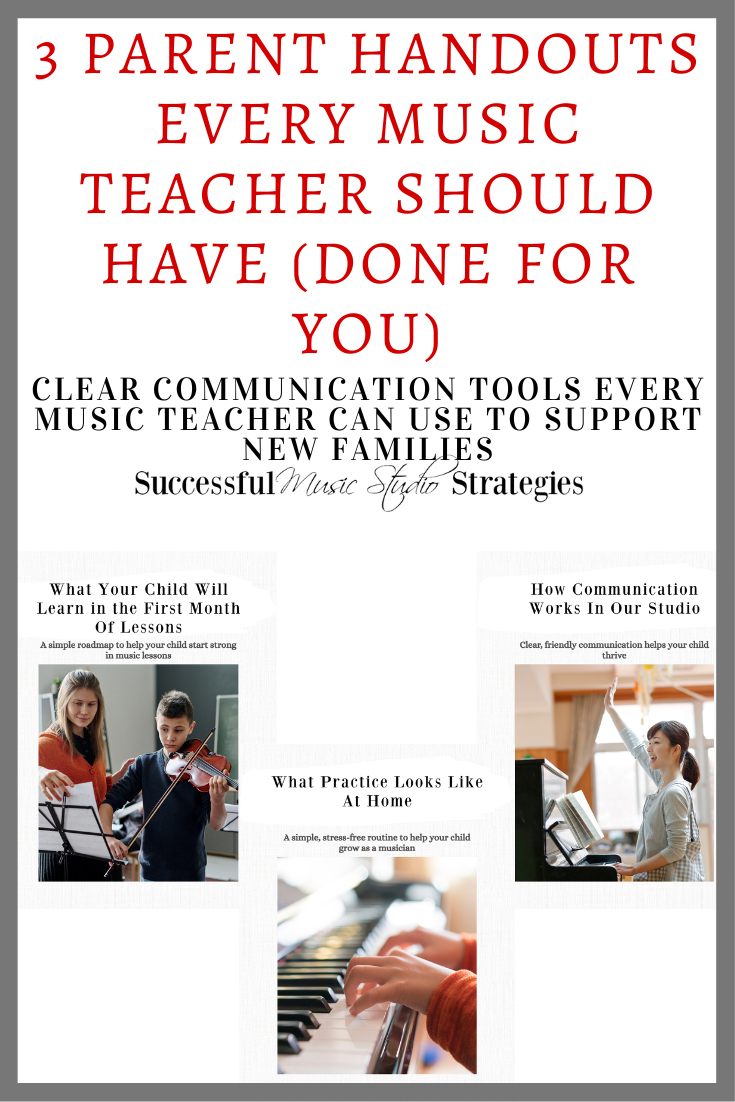
Clear communication tools every music teacher can use to support new families
One of the biggest challenges music teachers face isn’t teaching — it’s communicating expectations clearly to parents. When families understand what the first month looks like, how practice works at home, and how communication flows in your studio, everything runs smoother. Students progress faster, parents feel supported, and you spend less time repeating the same explanations week after week.
To make this easier, I’ve created three done‑for‑you parent handouts you can plug directly into your onboarding process. These handouts help you explain your core studio policies in a warm, simple, and professional way — without having to write everything from scratch.
Whether you’re welcoming brand‑new beginners or refining your current systems, these tools give you a polished, consistent way to set expectations from day one.
1. What Your Child Will Learn in the First Month
Parents want to know what to expect — and this handout gives them a clear, encouraging roadmap. It outlines the foundational skills students learn in their first four weeks, including:
• A simple warm‑up routine
• One short piece or pattern
• Basic posture and technique
• A beginner‑friendly practice habit
This handout helps parents feel confident about the learning process and reassures them that their child will experience early wins. It also positions you as an organized, intentional teacher with a clear plan for student success.
2. What Practice Looks Like at Home
Most parents aren’t sure what “good practice” actually means — and that uncertainty can lead to frustration for everyone. This handout breaks practice down into simple, doable steps:
• 10–15 minutes a day
• A predictable routine
• A quiet, prepared practice space
• A music notebook with weekly assignments
• A practice chart to track progress
When parents know exactly how to support their child, practice becomes smoother, more consistent, and far less stressful. This handout gives them the clarity they need to feel confident and involved.
3. How Communication Works in Your Studio
Clear communication is the backbone of a healthy studio. This handout explains:
• How parents can reach you
• When they can expect a response
• How you share student progress
• How scheduling and cancellations work
• What to do when questions come up
This simple page eliminates confusion, reduces repetitive emails, and helps families feel supported and informed. It also reinforces your professionalism and boundaries in a warm, approachable way.
Why These Handouts Matter
These three topics — first‑month expectations, home practice, and communication — are the questions parents ask most often. When you provide clear, consistent answers upfront:
• Parents feel confident
• Students feel supported
• You save time
• Your studio runs more smoothly
• Your policies feel friendly, not rigid
And because these handouts are done for you, you can start using them immediately.
Get the Handouts
I’ve bundled all three handouts into one clean, easy‑to‑use resource. You’ll get:
• A cover page
• An “about me” page
• A clear CTA page
• All three parent handouts, ready to print or share
Use them during onboarding, attach them to welcome emails, or include them in your studio handbook.
Download the 3 Done‑For‑You Parent Handouts and simplify your studio policies today.
Happy Teaching!
Becky
Private Piano Lessons Method Books

I’ve been using this Faber & Faber Piano Adventures 4 book series set since I started teaching in my home based studio back in 2007. I literally sat down in the music store and went through all the different method books and choose this series because it was slower paced, not introducing too many concepts at once or super early on giving a very strong foundation in the basics of note reading and counting. The 8th note learning doesn’t even happen until level 2A. And the book series has worked well for me!
When you decide on the method books you choose to use, I suggest you get a full set of every level to have on hand that way you have a set of books if your student forgets their books for lessons or if you are doing online lessons so you are following along in your set of books with the student during their lesson.
Happy Teaching!
Simplify Your Business: How to Maximize Your Teaching and Business Schedule

Running a private music studio and teaching lessons can be a fulfilling and rewarding experience, but it can also be overwhelming. Between managing your schedule and keeping track of your students' progress, it can feel like there's never enough time in the day. However, simplifying your business and maximizing your schedule with just a few days a week can help you achieve a better work-life balance while still providing quality education to your students.
One way to simplify your business is to streamline your scheduling process. Rather than offering lessons every day of the week, consider limiting your availability to just a few days and always back to back. This not only makes it easier for you to manage your time, it gives you a block of working hours that are easy to tell prospective parents about and you always know what slot is open. Plus, your students come to expect that their lesson day remains the same. Giving the students a sense of structure and consistency. You can offer multiple lesson times on those designated days to accommodate different schedules.
Another way to maximize your schedule is to prioritize your teaching methods and focus on what works best for you and your students. Instead of trying to teach every genre or style, hone in on your areas of expertise and offer those lessons exclusively. Or create a lesson plan for specific grades associated with a level. My advanced students all follow the same path. Freshmans, is fugue year. Sophomores, is mini Sonatina year. Junior is accompanist year (they will actually learn to accompany me while I play a horn solo) and Senior year, is Senior recital year ranging from a Mozart concerto to a big Solo piece. This not only makes it easier for you to prepare for each lesson, but provides a structure to your teaching.
In addition, for the back end of the teaching. You can simplify your bookkeeping and send emails only one day a month. For me, every 23rd of the month is the day I have scheduled on my calendar to send out lesson summaries, (tuition dues) And I wait until the 1st to do my banking from depositing checks or transferring the income received in my Paypal to my bank.
Ultimately, simplifying your business and maximizing your schedule with just a few days a week can help you achieve a healthier work-life balance while still providing quality education to your students. By streamlining your scheduling process, prioritizing your teaching methods, and incorporating technology, you can become more efficient and effective in your role as a private music instructor.
Happy Teaching!


I’m Becky and Welcome To Successful Music Studio Strategies where I help you create your own Successful Private Music Studio business through simple strategies I’ve learned and used in my own successful private music studio! Want to learn more about my online courses to help you start, build and create a successful and THRIVING music studio? Click here!