

Post Categories: What do you need help with?
Starting Your Studio
Keep Your Studio Running
Making Your Studio Thrive
How to Start a Music Studio from Scratch (Without the Overwhelm)
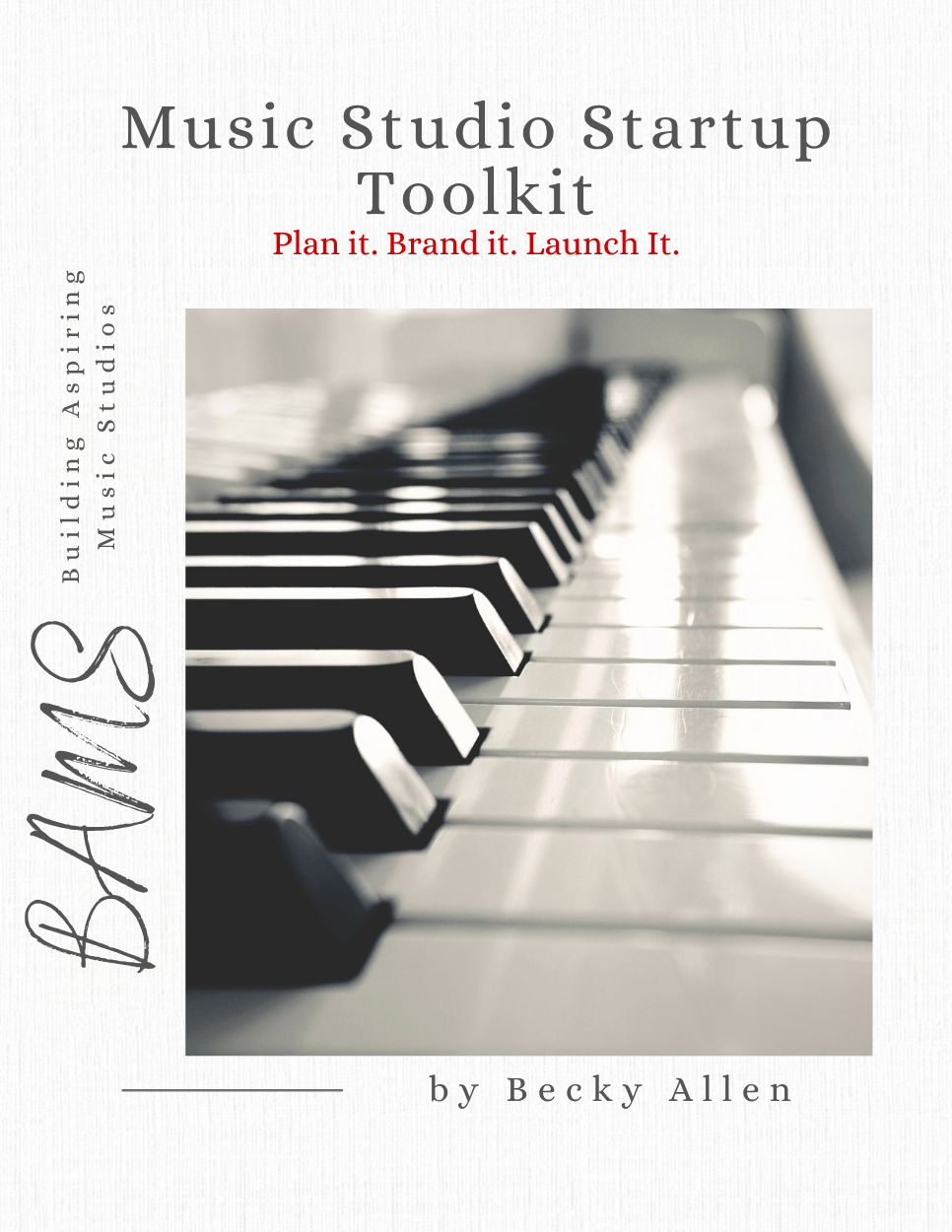
A step-by-step guide for new music teachers who are ready to turn their passion into a real, profitable business.
So you've decided to start a music studio. Maybe you've been teaching a few students informally, or maybe this is a brand new idea still bouncing around in your head. Either way — welcome. You're in the right place.
Starting a private music studio is one of the most rewarding things you can do as a musician and teacher. But if you've ever Googled "how to start a music studio," you know the results are... a lot. Conflicting advice. Vague tips. Nothing that actually tells you what to do first.
That's exactly what this post is for. Let's walk through the foundational steps — in order — so you can stop overthinking and start building.
Step 1: Start with a real business plan
I know, I know. "Business plan" sounds intimidating. But it doesn't have to be a 40-page document. For a private music studio, your business plan is simply a clear picture of what you're building, who it's for, and how you'll sustain it.
Ask yourself: How many students do I want? What instrument(s) will I teach? Will I teach in-home, in a rented space, or online? Who is my ideal student — beginners, advanced players, adults, children?
Getting these answers on paper before you do anything else will save you hours of second-guessing later. It becomes your decision-making filter for everything that follows.
Step 2: Set your rates with confidence
Pricing is where most new studio owners get stuck — and where most undercharge. Setting your rates too low is one of the most common and costly mistakes in this business, and it's surprisingly hard to fix once parents expect a certain number.
A few things to factor in when setting your rates:
Your local market rate (what are other teachers in your area charging?)
Your experience, credentials, and specializations
Your income goals — reverse-engineer your monthly target
The cost of your time, materials, and overhead
Don't price based on what you think people will pay. Price based on what you need to make your studio sustainable — and then build the confidence to stand behind it.
Step 3: Build your studio policies before you take your first student
This is the step most new teachers skip — and they regret it almost immediately. Studio policies aren't just bureaucratic paperwork. They are the foundation of a professional, respectful relationship with your students and their families.
A solid studio policy covers:
Cancellation and make-up lesson procedures
Payment terms and due dates
Scheduling and availability boundaries
Communication expectations (how and when to reach you)
Student and parent behavior expectations
Setting these expectations from day one prevents the awkward conversations that drain your energy and erode the teacher-student relationship. The time to establish your policies is before problems arise — not after.
Step 4: Build your brand
Your brand is more than a logo. It's the feeling people get when they land on your website, receive a message from you, or walk into your studio space. It's the reason a parent chooses you over the next teacher on the list.
You don't need to hire a designer or spend thousands on branding. You need:
A clear studio name that's memorable and searchable
A consistent color palette and font style
A professional profile photo
A simple, clean website with your rates, contact info, and a way to enroll
Consistency is more important than perfection. Show up the same way every time, and trust builds naturally.
Step 5: Follow a launch roadmap — don't just wing it
The difference between teachers who launch successfully and those who stay stuck in "almost ready" mode is usually one thing: a plan with deadlines.
A 30-day launch roadmap breaks your studio launch into small, daily actions so that you always know exactly what to do next. No more decision fatigue. No more blank-page paralysis. Just momentum.
Whether you're launching in 30 days or 90, mapping out your milestones ahead of time gives you something to move toward — and something to celebrate along the way.
Ready to go deeper?
These five steps will get your studio off the ground. But building a studio that's truly profitable, sustainable, and fulfilling over the long haul takes more — it takes systems. For pricing, marketing, student retention, bookkeeping, recitals, and growth.
That's exactly what the Successful Music Studio Strategies Course is built for.
Not ready for the full course yet? Start with the Music Studio Startup Toolkit — just $50, and it's the perfect first step.
Happy Teaching!
Becky
Key Essentials: Everything You Need to Launch Your Own Private Music Studio

Ready to start your own music studio? First, you have to have a couple of things to be able to teach music lessons. (This post contains affiliate links)
1) Choose a method series that you will follow. for private piano lessons, I love the Faber & Faber Piano adventures and have been using the series for the past 15 years. It’s a little slower-paced than other series’ out there, but it develops a strong foundation in rhythm, and note names from the beginning BEFORE introducing more complex note values.
2) Invest in a piano. You don’t have to have a huge grand piano to start or an acoustic piano. You can start your studio with just an electric or digital piano. Here are 2 options that work well. A Full size 88-key weighted piano or here’s an option that you can take with you for easy portability as a traveling music teacher! Both are Yamaha which are considered the gold standard in electric pianos.
3. Students! For that I suggest you start here: STARTING YOUR STUDIO STRATEGIES to learn the secrets to geting your stuio started. And don’t forget, 12 Week Online Course Successful Private Music Studio Strategies to help you get started, build and create a successful and THRIVING private music studio! You can check that out here.
4. Studio Policy to set the boundaries and expectations with your new students. I’m a huge advocate for having an ironclad music studio because I’ve been there, where I didn’t have one and was taken advantage of by not getting paid, taken seriously, or families wasting my time by not showing up for lessons. Set yourself up TODAY with a strong ironclad studio policy to avoid any problems down the line. Check out my Successful Private Music Studio Policy Templates here! You can get a done for you studio policy, that is ironclad and stands the test of time. It took me years, to create this studio policy making sure I covered ALL THE BASES of expectations, to help new teachers just like you.
5. Bookkeeping. For business purposes, you need to be tracking income. This is how you can track your growth and continue to grow. Again, I’ve taken all the steps to help get you started, but providing ALL the templates I use for bookkeeping purposes with step by step videos to walk you through how to customize it for you and your business, from invoices (Lesson Summary) Receipts, student organizing, total money earned plus more! Check out my Successful Private Music Studios Bookkeeping Online Mini Course!
Happy Teaching!
Why You Need A Music Studio Policy

Are you ready to take your teaching to the next level and get the respect you deserve?
I've seen it time and time again — private music teachers with a handful of students, doing work they love, but not making a consistent income month to month. The stress of last-minute cancellations. Students who don't show up. Parents who don't take lessons seriously. Payments that come in late — or not at all.
Here's the thing nobody tells you when you start teaching: the problem usually isn't your teaching. It's the lack of a studio policy.
You Have a Business. Start Acting Like It.
If you are teaching private lessons, you have a business. You are being requested to do something you specialize in, and you are getting paid for it. So why aren't you getting the same respect as anyone else running a professional service?
The answer, almost every time, is that there are no clear rules in place. No written expectations. No document that says: here's how this works, here's what I require, and here's what happens if we need to make a change.
That document is your studio policy — and it changes everything.
What a Studio Policy Actually Does
A studio policy isn't just a formality. It's the foundation your entire business runs on. Here's what it does for you in practice:
It sets expectations from day one. New families know exactly what they're signing up for before their first lesson. No surprises about payment timing, cancellation rules, or what happens during school breaks.
It protects your income. Clear tuition and cancellation policies mean you stop absorbing the cost of last-minute no-shows. Your time has value whether a student shows up or not.
It establishes you as a professional. A signed policy signals that you take your business seriously — and that expectation transfers directly to how students and families treat you.
It reduces awkward conversations. When a difficult situation comes up — a student wants to quit mid-month, a parent pushes back on a late fee, a family keeps canceling — your policy handles it. You're not making judgment calls on the fly. You're pointing to a document you both signed.
It gives you something to update. As your studio grows and changes, your policy grows with it. A living document is far easier to improve than an unspoken set of assumptions.
How I Use It in My Own Studio
The studio policy is the first item in every welcome packet email I send to new families. I ask them to print two copies and bring them to their very first lesson — I collect a signed copy for my records and they keep the other.
That one habit has saved me more awkward conversations than I can count.
Already teaching without one? You can still implement a policy with your current students. Let them know you've updated your studio guidelines and want everyone to have a current copy on file. Just like any professional agreement, have them sign it, keep one copy, and give them the other. You just upped your professionalism overnight.
Just Getting Started?
Music Studio Startup Toolkit
Before you can write a great studio policy, you need a solid foundation — pricing, branding, business plan, and a clear launch roadmap. This 65-page toolkit walks you through every foundational decision before your first student walks in the door.
$50 · one-time · instant download
Get the Toolkit →What Your Studio Policy Should Cover
Every studio is different, but a solid policy covers at least these core areas:
Tuition and payment. How much, when it's due, how it's collected, and what happens if it's late. This is the most important section — vague payment policies are the #1 cause of income inconsistency in private studios.
Lesson scheduling. What days and times you teach, how far in advance lessons need to be scheduled, and whether you offer summer lessons or take scheduled breaks.
Missed lesson policy. This one is critical. Be specific: missed lessons are not the responsibility of the teacher. You can decide how many makeups you offer, if any, but get it in writing before it comes up.
Discontinuing lessons. How much notice is required when a student wants to stop? Two weeks? Thirty days? Having this in writing protects your income when a family decides to quit unexpectedly — and gives you time to fill the spot before it goes empty.
Communication expectations. How do families reach you? What's your response time? Is texting acceptable or do you prefer email? Setting this upfront prevents the boundary-blurring that comes with informal teaching relationships.
Done-for-You Templates
Successful Music Studio Policy Templates
Don't start from scratch. These fully customizable templates are already written — covering tuition, cancellations, scheduling, communication, and more. Includes a step-by-step tutorial video to help you customize it to fit your studio. Two options available depending on where you are in your studio journey.
Advanced adds income growth strategies, student retention, and referral incentive sections.
You Are Worth the Respect
Lessons should be a priority — for you and for your students. You have spent years developing your craft. You show up every week prepared to teach. You deserve to be taken seriously.
A studio policy doesn't make you rigid or difficult. It makes you professional. The teachers who have the fullest, most stable studios — the ones with waitlists, consistent income, and families who stay for years — almost always have one thing in common: clear, written expectations from day one.
Don't wait for a bad situation to force you into writing one. Write it now, before you need it, and let it do the work of protecting your business so you can focus on what you actually love — teaching.
Ready to Build a Studio That Runs Like a Business?
Successful Music Studio Strategies — Signature Course
Studio policies are just the beginning. The Signature Course covers 59 lessons across every stage of building a thriving private studio — from pricing and branding to bookkeeping, student retention, recitals, and income growth. The complete roadmap, built for private music teachers.
$1,250 · or 3 payments of $500
Learn More →Happy Teaching!
Becky
Keep the momentum going
What are you looking for next?
⭐ Start Here
🗺️ Build Your Studio Foundation
Startup Toolkit · $50 · Business plan, pricing, branding & 30-day roadmap →
📄 Get Your Studio Policy Done
Done-for-You Policy Templates · from $125 · Customizable & ready to sign →
🎓 Build a Studio That Runs Like a Business
Signature Course · 59 lessons · Everything to launch & grow →
🗺️ Not Sure Where to Start?
Free · 2 minutes · Start Here page →


I’m Becky and Welcome To Successful Music Studio Strategies where I help you create your own Successful Private Music Studio business through simple strategies I’ve learned and used in my own successful private music studio! Want to learn more about my online courses to help you start, build and create a successful and THRIVING music studio? Click here!