

Post Categories: What do you need help with?
Starting Your Studio
Keep Your Studio Running
Making Your Studio Thrive
How to Keep Music Students Coming Back Year After Year
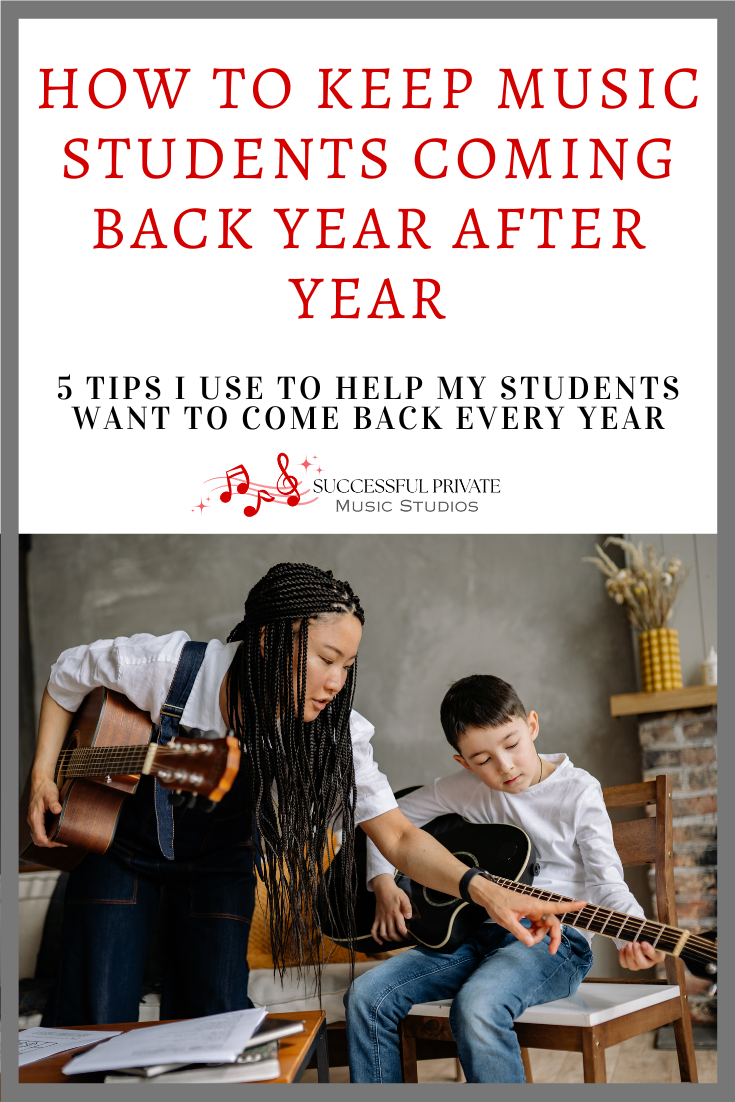
Here's a truth that took me a while to fully accept: a student who quits isn't always a student who didn't like music. Sometimes they quit because they didn't feel connected — to the lessons, to their progress, or to you as their teacher.
Retention isn't just about being a good teacher. It's about building a studio experience that students and families don't want to leave. After nearly 30 years of teaching, here's what I've learned actually makes the difference.
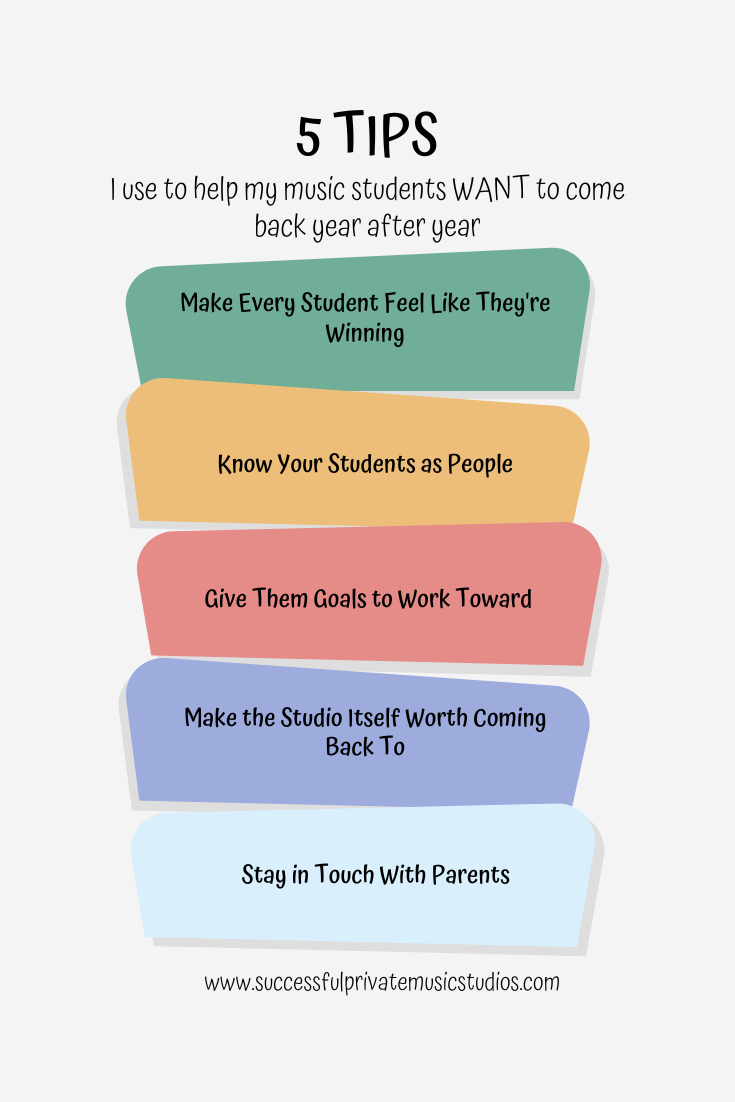
Make Every Student Feel Like They're Winning
Students who feel successful keep coming back. Students who feel like they're always behind eventually stop showing up.
This doesn't mean lowering your standards — it means being intentional about how you frame progress. Even in a lesson where nothing went perfectly, find the one thing that got better and name it. "Your left hand was so much steadier today than last week." That moment of recognition sticks. It's what they tell their parents on the way home.
Younger students especially need to feel a win at every single lesson. Build your lesson structure so they always end on something they can do well — not something they're still struggling with.
Know Your Students as People
Ask about their week. Remember that they had a soccer tournament. Notice when they seem off and give them a little grace. Students stay with teachers they feel seen by — not just instructed by.
This is one of the easiest things to do and one of the most overlooked. You don't need to be their therapist or their best friend. You just need to be a person who pays attention. That alone sets you apart from most teachers they'll ever have.
Build Your Studio Foundation
Music Studio Startup Toolkit
New to studio ownership? The Startup Toolkit covers your business plan, pricing, studio policy basics, branding, and a full 30-day launch roadmap — 65 pages built for teachers who want to start strong and stay organized from day one.
$50 one-time · instant download
Get the Toolkit →Give Them Goals to Work Toward
Students who are working toward something specific practice more and quit less. It doesn't have to be a big competition or a formal audition — it can be as simple as "let's get this piece performance-ready by the recital" or "your goal this month is to play your scales hands together without stopping."
Write the goal down. Put it in their assignment book. Check in on it the following week. That small layer of accountability creates a sense of forward momentum that keeps lessons feeling purposeful instead of repetitive.
Make the Studio Itself Worth Coming Back To
I've said it before and I'll keep saying it: the candy bowl works. So does decorating for holidays. So does the Halloween week lesson and the Christmas ornament gift and the sticker chart with the prize box. These things seem small, but they create a studio culture that students genuinely look forward to.
Your lesson room should feel like a place — not just a transaction. When students walk in and feel something, they come back.
Stay in Touch With Parents
The families most likely to quietly disappear are the ones who feel out of the loop. A short monthly email, a quick progress note at the end of a lesson, a heads-up before recital season — these touchpoints remind parents that you're invested in their child's growth, not just filling a time slot.
You don't need to over-communicate. You just need to communicate enough that parents feel informed and connected. When they feel like partners in the process, they keep their kids enrolled.
Want the Complete System?
Successful Music Studio Strategies — Signature Course
Student retention, parent communication, curriculum planning, recitals, income growth — all of it, in 59 lessons. This is the deep-dive resource for teachers who are ready to build a studio that truly thrives year after year.
$1,250 or 3 payments of $500
Learn More →Retention isn't a mystery. It's a collection of small, consistent choices that add up to a studio experience families don't want to give up. Start with one thing on this list and build from there.
Happy Teaching!
Becky
What do you want to tackle next?
Here are the best next steps depending on where you are right now.
Teaching Meets Talent: Monetize Your Musical Expertise on TikTok and Social Media

In today's digital age, social media platforms like TikTok, Instagram, and YouTube have transformed the way creators share their talents and connect with audiences. As a musician and teacher, you have the unique opportunity to showcase your expertise, inspire others, and even turn your skills into a source of income. Here’s why leveraging social media is worth it and how to get started.
Why Showcase Your Expertise on Social Media?
Reach a Global Audience Social media platforms break down geographical barriers, allowing you to connect with aspiring musicians and enthusiasts from around the world. Your expertise can inspire and educate countless individuals who might otherwise never have access to your teaching.
Build Your Personal Brand By consistently sharing high-quality content, you establish yourself as an authority in your field. A strong personal brand builds trust, attracts followers, and opens doors to opportunities such as collaborations, sponsorships, and paid gigs.
Monetize Your Passion Platforms like TikTok and Instagram offer multiple ways to generate income:
Attract new students for private lessons or courses.
Partner with brands for sponsorships and promotions.
Earn through platform monetization programs like TikTok’s Creator Fund or YouTube’s ad revenue system.
Sell your own products, such as sheet music, lesson plans, or merchandise.
How to Get Started
Define Your Niche Think about what sets you apart as a musician and teacher. Do you specialize in a specific genre, instrument, or teaching style? Focusing on a niche allows you to connect with a targeted audience and makes your content more impactful.
Plan Your Content Your content should balance education, entertainment, and engagement. Here are some ideas:
Share quick tips or tutorials for beginners and advanced students alike.
Post performances or covers of popular songs to showcase your talent.
Create behind-the-scenes content of your teaching process or practice sessions.
Answer frequently asked questions to provide value to your audience.
Use trending challenges or sounds to reach a wider audience on platforms like TikTok.
Be Consistent Post regularly to keep your audience engaged. Create a content schedule that works for you, whether it’s weekly tutorials or daily tips. Consistency helps grow your following and keeps you top of mind.
Engage with Your Audience Social media isn’t just about broadcasting; it’s about building a community. Respond to comments, answer questions, and collaborate with other creators. The more interactive you are, the stronger your connection with your audience will be.
Use the Right Tools
Video Editing Software: Apps like CapCut, InShot, or Canva can help you create polished content.
High-Quality Audio: Invest in a good microphone to ensure your music and teaching sound professional.
Analytics: Use platform insights to understand what content resonates with your audience and adjust your strategy accordingly.
Monetize Strategically Once you’ve built a following, explore monetization options:
Offer online lessons or courses tailored to your audience.
Partner with brands for paid promotions that align with your values.
Create exclusive content on platforms like Patreon for loyal supporters.
Sell downloadable materials, such as practice guides or sheet music.
Final Thoughts
Sharing your teaching and musical expertise on social media isn’t just about building an audience; it’s about building connections, sharing your passion, and inspiring others to pursue their own musical dreams. By leveraging the power of platforms like TikTok, you can turn your talent into a sustainable and fulfilling career.
Remember, the key is to stay authentic. Your unique voice and approach are what will set you apart in a crowded digital space. So grab your instrument, hit record, and start turning your musical expertise into a thriving online presence. The world is waiting for your talent! 🎶✨
Happy Teaching, and Performing!
From Stage to Spotlight: Encouraging Student Participation in Local Festivals and Competitions

Learning music extends far beyond the studio. Lessons and practice matter, but there’s something special about students stepping outside their comfort zones and sharing their playing with a bigger audience.
Local festivals, competitions, and auditions are one of the best ways to inspire growth, build confidence, and give students a memorable experience. Here’s why they matter, and how to help your students walk into them prepared and proud.
Why Festivals and Competitions Matter
1. They build confidence and stage presence. Performing for an audience helps students work through stage fright and develop poise. Those skills carry into school presentations, interviews, and everything else they’ll do in life.
2. They give students a goal and a way to measure progress. A date on the calendar changes how a student practices. Festivals and competitions also give students a benchmark, a way to see how far they’ve come and what to work on next.
3. They connect students to a bigger musical community. Local events put students in a room with peers, mentors, and other musicians. They make friends, hear different playing, and see themselves as part of something larger than their weekly lesson.
4. They teach resilience. Students learn to take both praise and constructive feedback gracefully. Hearing an adjudicator’s comments and using them is one of the best lessons a young musician can get.
How to Support Your Students
1. Help them choose the right event.
Research what’s available locally and match the event to the student. A relaxed, non-competitive festival is a great first step for a nervous student. A competitive showcase or concerto competition suits an advanced student looking for a challenge. The goal is growth without overwhelm.
Registration deadlines for spring events often fall in the winter, so the planning window is earlier than most teachers expect. Start looking now so you’re not scrambling when a deadline sneaks up.
2. Guide their preparation.
Choose repertoire that highlights the student’s strengths while still stretching them, and back-plan from the event date. Work out how many weeks you have, then break the piece into sections with a clear target for each week.
Build in a few “dress rehearsals”: have the student play the whole program for you, for a parent, or for a small audience, without stopping, even if something goes wrong. That’s how students learn to keep going through a mistake, which is what real performance requires.
3. Offer mentorship beyond the music.
Talk through performance etiquette, how to walk on and off stage, how to bow, what to wear, and how to handle the moments before playing. A student who knows what to expect feels far less nervous than one who’s guessing.
4. Celebrate every effort.
Win or lose, showing up is a victory. Celebrate the work and the courage, and remind students that the journey matters as much as the result. If a student doesn’t place, talk through the adjudicator’s comments together and pick one or two things to work on next. That turns a disappointment into a plan.
html
<div style="width:100%;box-sizing:border-box;background:#f9f9f9;border-left:4px solid #D40000;padding:24px 28px;margin:32px 0;font-family:inherit;">
  <p style="margin:0 0 4px 0;font-size:12px;font-weight:700;letter-spacing:1.5px;text-transform:uppercase;color:#D40000;">Done-for-You Student Resource</p>
  <p style="margin:0 0 8px 0;font-size:20px;font-weight:700;color:#1a1a1a;">Spring Practice Challenge Kit — Set 1</p>
  <p style="margin:0 0 16px 0;font-size:15px;color:#5e5e5e;line-height:1.6;">Preparing students for a spring festival, audition, or recital? This done-for-you challenge kit keeps them practicing consistently from January through performance day. Just print, hand out, and watch your students show up more prepared every week.</p>
  <p style="margin:0 0 12px 0;font-size:22px;font-weight:700;color:#1a1a1a;">$37.50 <span style="font-size:14px;font-weight:400;color:#5e5e5e;">· instant download</span></p>
  <a href="https://www.successfulprivatemusicstudios.com/spring-2026-practice-challenge-kit-landing-page" style="display:inline-block;background:#D40000;color:#fff;text-decoration:none;font-size:14px;font-weight:700;padding:11px 24px;border-radius:3px;">Get the Spring Kit →</a>
</div>
Ideas for Local Opportunities
Recitals. A supportive first step for beginners. Your own studio recital is the lowest-pressure way to build performance experience. (Here’s a guide to strategies for successful studio performances and recitals.)
Music festivals. Non-competitive events where students perform and receive feedback from professional adjudicators. Check with your local Music Teachers National Association affiliate, since they often hold yearly festivals. Local music clubs are another good source, and they often host recitals and even concerto competitions.
Competitions. A good fit for more advanced students who want a challenge and recognition. Check with local youth symphonies, community ensembles, and professional ensembles, since many hold concerto competitions and some offer prizes for winning.
Community events. Performances at schools, libraries, senior centers, and fundraisers teach students the joy of giving their music to others, and they’re low-pressure.
Handle the Logistics Before They Become Problems
Festivals and competitions bring practical questions your regular lessons don’t: entry fees, travel, extra rehearsal lessons, accompanist costs, and what happens if a family cancels last minute.
Two habits make this much smoother:
Put expectations in writing. Spell out who pays entry fees, whether extra prep lessons are billed separately, and how much notice you need if a student withdraws.
Track your own costs. If you pay a registration fee, buy an accompanist’s time, or travel to support students, those are studio expenses worth recording.
Done-for-You Templates
Successful Music Studio Policy Templates
Clear expectations make every performance opportunity easier to manage, from fees and extra lessons to cancellations and communication. These fully written templates cover the policies your studio runs on, with a step-by-step tutorial video and lifetime access.
Advanced adds income growth strategies, student retention, and referral incentive sections.
A Day-Of Checklist to Share With Families
Send this to parents a week before any festival, audition, or competition:
Confirm the arrival time, location, and parking
Bring a copy of the music (and a copy for the adjudicator if required)
Dress comfortably and appropriately, with shoes the student can play in
Eat beforehand, and bring water
Arrive early to warm up and settle in
Plan something fun afterward, no matter how it goes
A short, clear list like this takes pressure off parents and keeps the student’s focus on the music. For more on getting students ready, see these pre-recital practice tips.
Take the Stress Out of Studio Finances
Successful Music Studio Bookkeeping Mini Course
Entry fees, accompanist payments, travel, and event costs add up through the year. This mini course shows you exactly how to track your studio income and expenses, organize receipts, and stay tax-ready all year long.
$299 · lifetime access
Get the Bookkeeping Mini Course →Final Note
Participating in local festivals and competitions is about much more than trophies or applause. It’s about growth, connection, and discovery. When you encourage students to take these opportunities, you help them find their voice and make an impact on the world around them.
It’s also good for your studio. Students with performance goals practice more consistently, families see tangible progress, and students who feel challenged and celebrated tend to stay enrolled longer. (If retention is on your mind, here’s how to keep music students coming back year after year.)
So what’s the next spotlight for your students? Pick one event this season, put the date on the calendar, and start preparing.
Happy Teaching!
Becky
Keep the momentum going
What do you need help with next?
⭐ Most Popular
🎓 Build a Studio That Runs Like a Business
Signature Course · 59 lessons · Recitals, retention & growth →
🚀 Make Your Studio Thrive
Part 3 Course · $500 · Recitals, growth & income streams →
🗺️ Build Your Studio Foundation
Startup Toolkit · $50 · Business plan, pricing & branding →
🗺️ Not Sure Where to Start?
Free · 2 minutes · Start Here page →
Pre-Made Holiday Themed Canva Recital Program Templates

Need help with a quick and easy recital program? I made 6 different Holiday Themed Recital Program Templates this year you can use using Canva.com
You must create an account to access, and be sure to save the templates to your account before you make changes so everyone can access them as they are now.
Happy Teaching!
Becky
Unleash Your Income Potential: Discover New Ways to Increase Your Revenue Streams

Ever find yourself doing the same thing over and over again in your music studio and wonder, what if I just made something so I don't have to keep writing this same thing out all the time?
That was me. I was always writing out the same fingering chart for scales — week after week, student after student. I have a general rule: if I'm consistently doing the same thing, find a way to automate it. So I took my own advice and created a scale studies book for double horn.
But then I realized something. There's nothing like this already out there. So what if I sold it? What if I self-published it on Amazon and reached a broader audience than just my own studio?
In my area, I'm limited by my county on how many students I can have. So I started thinking outside the box on how I can help more people on a broader scale — and ultimately increase my revenue streams without adding more teaching hours.
Here are three ways you can do the same thing.
1. Create and Sell Digital Products
If you're writing the same thing out for students week after week — a scale chart, a practice guide, a theory worksheet, a fingering reference — you already have a product idea. The only difference between what you're doing now and a sellable product is packaging and distribution.
Digital products can include:
Ebooks or guides (like a beginner's guide to reading music, or a parent's guide to supporting home practice)
Printable worksheets or flashcards
Practice challenge kits
Scale studies or technical exercise books
Done-for-you lesson templates
The beauty of digital products is that you make them once and sell them indefinitely. There's no cap on how many you can sell, no shipping, and no additional time required after the initial creation. That's as close to passive income as a music teacher can get.
New Resource
Music Studio Startup Toolkit
Just getting started and want to build a solid foundation first? The Startup Toolkit covers your business plan, pricing, branding, studio policy basics, and a full 30-day launch roadmap — 65 pages, designed for new teachers who want clarity from day one.
$50 one-time · instant download
Get the Toolkit →2. Offer Online Lessons or Premade Lesson Content
Teaching online opened up a whole new way to think about the reach of a private studio. You're no longer limited to the families within driving distance — or in my case, limited by county rules on how many in-person students I can take.
There are two ways to approach this:
Live online lessons work the same way as in-person lessons, just through FaceTime, Zoom, or Google Meet. They let you serve students in other cities, states, or even countries — and they give you scheduling flexibility that in-person teaching often doesn't.
Premade lesson content takes it a step further. Think recorded video lessons on a specific topic — how to read treble clef, how to practice hands separately, how to prepare for an audition — that students can purchase and access on their own time. Platforms like Teachable, Podia, or even a simple Squarespace page can host this kind of content. You record it once, and it can generate income indefinitely.
Even a small, focused mini-course — five videos on one specific skill — is a legitimate product. You don't have to build a 60-lesson signature course on day one.
3. Build a Social Media Presence That Works for You
Social media isn't just for attracting local students anymore. A well-built presence on Instagram, TikTok, or YouTube can attract followers from all over the country — and those followers can become customers for your digital products, online lessons, or courses.
The key is creating content that is duplicatable. Something you can recreate over and over in a slightly different way without starting from scratch every time. Some ideas:
Short clips of you playing — a famous solo, a movie theme, a piece your students are working on
Quick teaching tips: "The one thing I tell every beginning piano student"
Behind-the-scenes of your studio: recital prep, lesson day setup, student wins
Parent education content: how to support practice at home, what to expect in the first month of lessons
You don't need to go viral. You need to show up consistently, speak to the right audience, and give people a reason to follow you — and eventually, a reason to buy from you.
Ready to Go Deeper?
Successful Music Studio Strategies — Signature Course
59 lessons covering pricing, branding, marketing, student retention, bookkeeping, recitals, and income growth — including a full module on expanding your revenue beyond in-person teaching. This is the complete roadmap for building a studio that thrives on your terms.
$1,250 or 3 payments of $500
Enroll Now →The Bigger Picture
The world is a big place, and your knowledge and experience as a music teacher have value beyond the four walls of your studio. Whether it's a $10 printable, a $50 toolkit, or a full online course, the teachers who are building the most sustainable businesses right now are the ones who stopped trading only time for money.
You don't have to do all of this at once. Pick the one that feels most natural to you — the thing you already do in your studio that could be packaged and shared — and start there.
What are other ways you've found to grow your income outside of your teaching schedule? Drop a comment below!
Happy Teaching!
Becky
What do you want to tackle next?
You've got the ideas — here are the best next steps depending on where you are right now.



I’m Becky and Welcome To Successful Music Studio Strategies where I help you create your own Successful Private Music Studio business through simple strategies I’ve learned and used in my own successful private music studio! Want to learn more about my online courses to help you start, build and create a successful and THRIVING music studio? Click here!