

Post Categories: What do you need help with?
Starting Your Studio
Keep Your Studio Running
Making Your Studio Thrive
Practice with Purpose: Creative Ways to Motivate and Engage Your Music Students

Practicing is the cornerstone of musical progress, but let’s face it: keeping students motivated to practice can sometimes feel like an uphill battle. As educators, it’s our job to make practicing not only effective but also fun and engaging. When students practice with purpose and enthusiasm, they make meaningful progress while developing a lifelong love for music. Let’s explore some creative ways to incentivize practice and keep your students inspired!
1. Gamify the Practice Experience
Transform practice into a game to keep it exciting and rewarding:
Practice Challenges: Create weekly or monthly challenges, like mastering a tricky passage or playing a piece flawlessly three times in a row. Offer small rewards, like stickers, certificates, or even virtual badges.
Progress Charts: Use charts or apps where students can track their practice time or accomplishments. Seeing their progress visually can be highly motivating.
Practice Bingo: Design a bingo card with different practice tasks (e.g., “Play with perfect dynamics” or “Practice for 20 minutes without stopping”). Completing a bingo earns students a reward.
It’s not too late to get access to the Spring 2026 DONE FOR YOU Practice Challenge with the Practice To Performance Challenge Kit! Get it blow or learn more HERE
2. Personalize the Journey
Every student is unique, so tailor their practice experience to match their interests and goals:
Repertoire Selection: Choose pieces that resonate with their musical tastes or connect to their favorite artists. Personal passion fuels motivation.
Creative Assignments: Encourage them to compose their own short pieces or create variations on a song they love.
Student-Driven Goals: Let them set their own practice goals, whether it’s learning a specific piece, mastering a technique, or preparing for a performance.
3. Incorporate Technology
Leverage digital tools to modernize and enhance the practice experience:
Apps for Practice: Apps like Tonara, Piano Maestro, or Simply Piano make practice interactive and fun by providing feedback, tracking progress, and offering rewards.
Recording Sessions: Have students record themselves during practice. Listening back not only helps them identify areas for improvement but also lets them celebrate how far they’ve come.
Virtual Duets: Pair students with you or other students for online collaborative performances. Technology allows for creative engagement, even outside the lesson room.
4. Celebrate Achievements
Recognition can go a long way in motivating students:
Practice Awards: Hand out awards for consistency, improvement, or creative effort during practice sessions.
Showcase Talent: Create opportunities for students to share what they’ve learned. Recitals, studio showcases, or even sharing videos online can be a great way to acknowledge their progress.
Highlight Milestones: Celebrate when they reach a significant milestone, like completing a challenging piece or mastering a new technique.
5. Foster a Growth Mindset
Encourage students to view practice as an opportunity for growth rather than a chore:
Celebrate Effort, Not Just Results: Praise their dedication and improvement, even if they don’t get it perfect right away.
Teach Problem-Solving: Show them how to break down difficult sections into manageable parts. This empowers them to approach challenges with confidence.
Focus on Fun: Remind them that music is about joy and expression. A light-hearted approach helps create a positive association with practice.
6. Get Families Involved
Parents and guardians play a key role in encouraging practice:
Parent-Student Practice Sessions: Encourage parents to participate in practice time, even if it’s just as an audience.
Practice Logs: Provide logs where parents can leave encouraging notes or observations about practice sessions.
Family Recitals: Organize informal performances at home, fostering a supportive environment where students feel proud to share their progress.
Final Thoughts
Engaging students in practice doesn’t have to be a struggle. By incorporating creativity, personalization, and a sense of fun, you can transform practice into a purposeful and enjoyable part of their musical journey. Remember, the ultimate goal is to help students build a lifelong connection with music—one that inspires passion, perseverance, and joy.
Now it’s time to take these ideas and start inspiring! How will you make practicing purposeful and fun for your students today? 🎶
Happy Teaching!
Crafting the Perfect Welcome Packet for New Students: Setting the Stage for Success and Connection
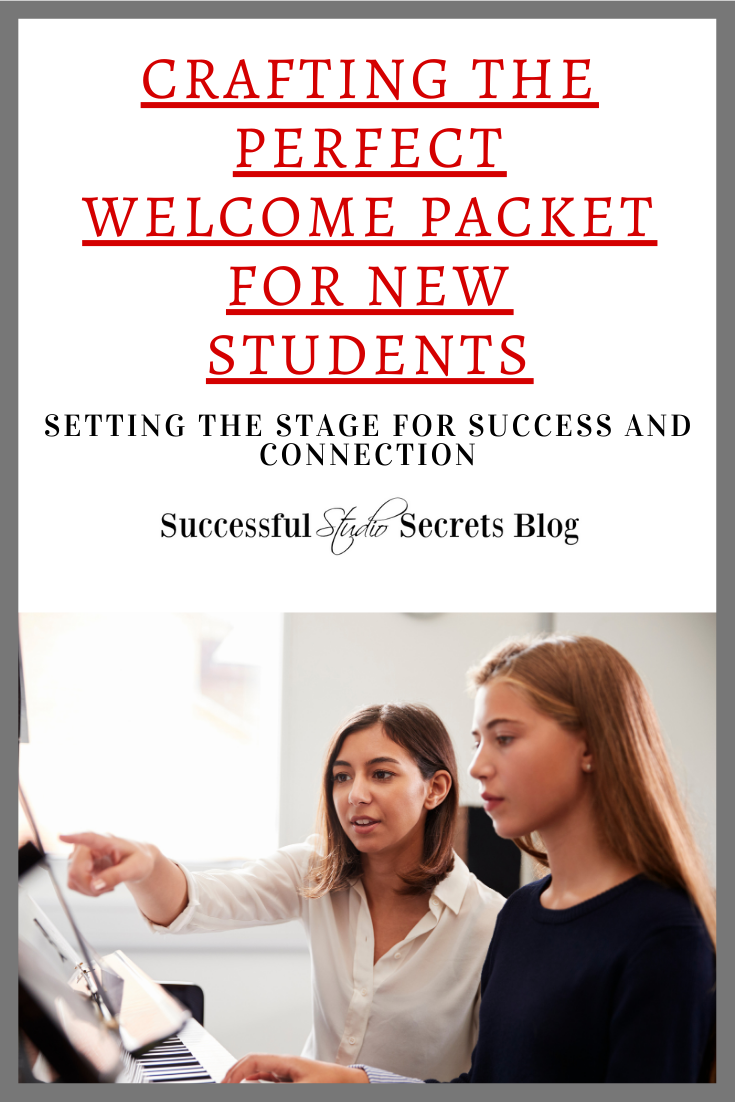
First impressions matter — especially when welcoming new students into your studio. Before a family ever sits down for that first lesson, they're already forming an opinion about you. Are you organized? Are you professional? Do you know what you're doing?
A thoughtfully designed welcome packet answers all three questions before anyone has to ask.
It's not just paperwork. It's the first real experience a family has with your studio — and it sets the tone for everything that follows. When done well, a welcome packet communicates professionalism, builds trust, and makes new families feel like they made the right choice choosing you.
Here's exactly what to put in yours, and why each piece matters.
Why Every Studio Needs a Welcome Packet
Most teachers hand new students a policy sheet and call it a day. A welcome packet is something different — it's a complete, intentional first impression that does several things at once.
It establishes you as a professional. A well-prepared packet signals that you take your studio seriously. Families notice the difference between a teacher who hands them a crumpled photocopied sheet and one who sends a clean, organized, branded document. That difference affects how much they respect your time, follow your policies, and stick around long term.
It sets clear expectations from day one. The most common source of friction between teachers and families isn't personality conflicts — it's misaligned expectations. Who pays for a missed lesson? What happens if they need to cancel? When is tuition due? A welcome packet answers these questions before they become problems.
It reduces your workload. Every question your welcome packet answers is a text you don't have to respond to at 9pm. When families have a single document they can reference, you spend less time on back-and-forth communication and more time teaching.
It makes families feel valued. A personal, thoughtfully written welcome packet tells new students and parents: you matter here. That feeling of being welcomed — not just enrolled — is what turns a new student into a long-term one.
What to Include in Your Welcome Packet
1. A Personal Welcome Letter
This is the first thing families read, so make it count. Introduce yourself warmly, share your teaching philosophy in a sentence or two, and express genuine excitement about working with their student. This isn't the place for formality — it's the place for connection.
Include the practical details in the letter too: date and time of the first lesson, the address (with a hyperlink if you're sending digitally), and any first-lesson instructions like what to bring or where to park. Make it easy for them from the very first communication.
2. Your Studio Policies
This is the most important functional piece of your welcome packet. Your policies should cover:
Tuition amount, due date, and accepted payment methods
Cancellation and makeup lesson rules — your rules, stated clearly
Practice expectations for students at home
How and when to communicate with you
What happens with extended absences or withdrawals
Online lesson protocols if applicable
Write your policies in a friendly but firm tone. You're not trying to sound like a legal contract — you're trying to sound like a professional who respects both her time and her students'. Families respond well to clarity. Vague policies invite negotiation; clear ones prevent it.
3. First Tuition Summary
Include a simple summary of what's due, when it's due, and how to pay it. If you charge an enrollment or registration fee to reserve the student's spot, note that here as well. Getting the financial piece in writing from day one removes the awkwardness of bringing it up later.
4. Studio Calendar
Provide a calendar showing important dates for the current season — holidays, studio closures, recital dates, and any registration deadlines. Families who can plan ahead are families who stay enrolled. Surprises (like finding out in November that you take two weeks off at Christmas) create frustration that a simple calendar prevents entirely.
5. "How Lessons Work" Overview
A short, friendly one-pager that explains the rhythm of your studio: how long lessons are, what a typical lesson looks like, what you expect from students between sessions, and how progress is measured. This is especially helpful for families who are new to private lessons and don't know what to expect.
6. Contact Information and Communication Preferences
Be explicit about how you prefer to be reached, your typical response time, and any boundaries around after-hours messages. Setting this expectation upfront prevents the Sunday night texts asking about Tuesday's lesson.
How to Create and Format Your Welcome Packet
Digital vs. Physical
Most teachers send welcome packets digitally as a PDF — it's fast, easy to update, and eliminates printing costs. A digital packet can also include clickable links (to your calendar, your payment portal, your studio address), which makes the experience even smoother for families. That said, there's something genuinely warm about a physical packet handed to a new student on day one. Some teachers do both: a digital version sent before the first lesson, and a printed copy available at the studio.
Design matters more than you think.
Your welcome packet is a branded document. It should reflect your studio's visual identity — your colors, your logo, your fonts. A well-designed packet reinforces that you're professional and intentional. Canva is an excellent free tool for this; you can create a clean, beautiful packet in an afternoon even with no design background.
Keep it organized with clear sections and headers. Families should be able to scan it quickly and find what they need. Dense walls of text get skimmed or ignored; a clean, easy-to-read layout gets read.
Keep it current.
Review your welcome packet at the start of every new season — fall and summer are natural checkpoints. Update tuition rates, calendar dates, policy language, and contact information as needed. An outdated welcome packet creates confusion and undermines the professionalism you worked to establish.
The Welcome Packet Is Just the Beginning
A great welcome packet doesn't just onboard a new student — it starts a relationship. When families feel informed, respected, and welcomed from day one, they stick around. They refer their friends. They show up to recitals. They become the kind of studio families that make this work genuinely rewarding.
The time you invest in creating a thoughtful welcome packet pays dividends for every student who walks through your door. Do it once, do it well, and update it every season. It's one of the highest-leverage things you can do for your studio.
Happy Teaching!
Becky
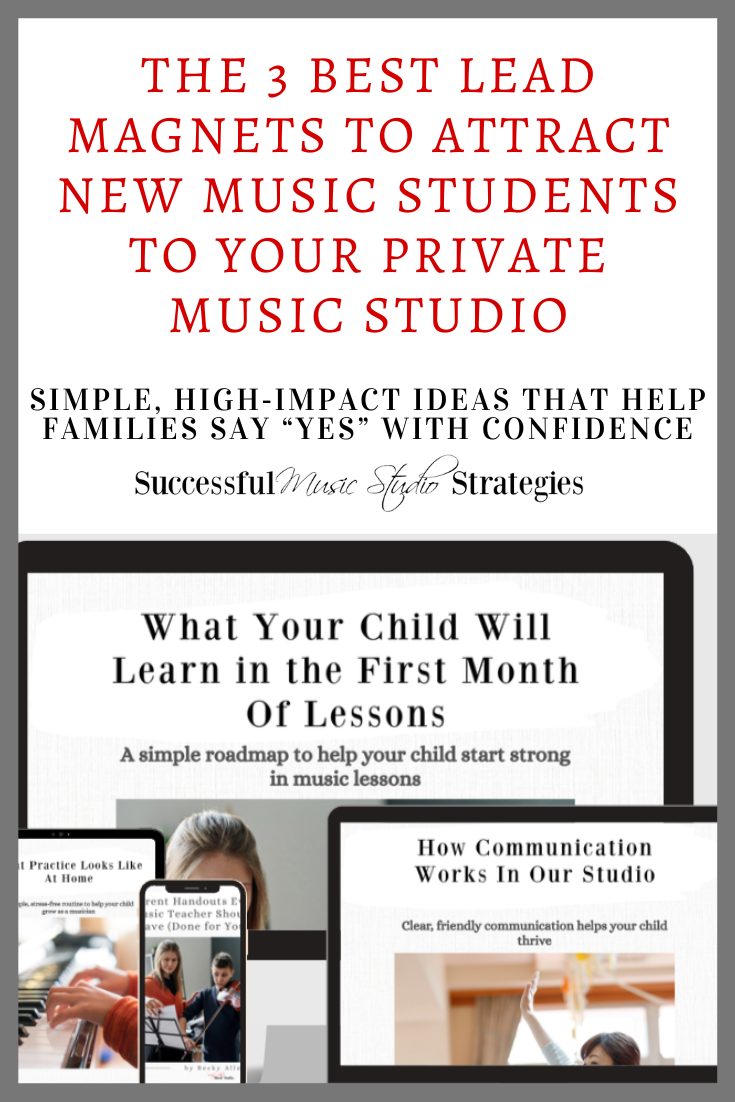
The 3 Best Lead Magnets to Attract New Music Students to Your Private Music Studio
Simple, high‑impact ideas that help families say “yes” with confidence
Growing a private music studio isn’t just about being a great teacher — it’s about helping families understand the value of what you offer. And one of the most effective ways to do that is through a lead magnet: a free, helpful resource that parents can download in exchange for joining your email list.
A strong lead magnet builds trust, showcases your expertise, and gives families a taste of what it’s like to learn with you. When done well, it becomes one of the most powerful tools for turning curious parents into committed students.
Here are the three best lead magnets to attract new music students to your studio — simple, polished, and proven to work.
1. “What Your Child Will Learn in the First Month”
Parents want clarity. They want to know what to expect, how quickly their child will progress, and what the first few weeks will look like. This lead magnet answers all of those questions in a warm, reassuring way.
A strong first‑month guide includes:
• A simple warm‑up routine
• The first skills students learn
• A sample practice plan
• A short list of early wins
• A friendly note about how you support beginners
Why it works:
It removes uncertainty. Parents can picture their child succeeding, and that confidence makes enrollment feel like an easy next step.
2. “What Practice Looks Like at Home”
One of the biggest barriers to starting lessons is the fear that practice will be stressful, confusing, or overwhelming. This lead magnet shows parents that practice can be simple, structured, and doable.
A great practice guide includes:
• A recommended practice length
• A step‑by‑step routine
• A description of a good practice space
• A music notebook or assignment system
• A practice chart to track progress
Why it works:
Parents feel supported. They understand exactly how to help their child — and that makes them far more likely to commit to lessons.
3. “How Communication Works in My Studio”
Clear communication builds trust. When parents know how to reach you, what to expect, and how scheduling works, they feel more confident and more connected to your studio.
This handout can include:
• Your preferred communication method
• Response time expectations
• How you share student progress
• Scheduling and cancellation policies
• What to do when questions come up
Why it works:
It positions you as organized, professional, and approachable — three qualities parents look for when choosing a teacher.
Why These Lead Magnets Convert So Well
These three topics answer the questions parents ask most often. When you provide clear, friendly information upfront:
• Families feel supported
• You build trust before they ever meet you
• Parents see you as a guide, not just a service
• Enrollment becomes a natural next step
And because these lead magnets are simple and practical, they appeal to the exact families you want to attract — the ones who value communication, structure, and a positive learning environment.
How to Use These Lead Magnets in Your Studio
You can plug these into your marketing in several ways:
• Add them to your website as a free download
• Share them on Pinterest to reach searching parents
• Include them in your email welcome sequence
• Use them in your studio’s onboarding packet
• Share them in local parent groups or community pages
The goal is to make it easy for families to learn about your studio and feel confident taking the next step.
Ready to Attract More Students?
I’ve created three done‑for‑you parent handouts that cover all of these topics — beautifully designed, easy to customize, and ready to use in your studio.
They’re the exact tools you need to communicate clearly, build trust, and welcome new families with confidence.
Fill out the form below and get INSTANT ACCESS!
Happy Teaching!
Becky
Teaching Meets Talent: Monetize Your Musical Expertise on TikTok and Social Media

In today's digital age, social media platforms like TikTok, Instagram, and YouTube have transformed the way creators share their talents and connect with audiences. As a musician and teacher, you have the unique opportunity to showcase your expertise, inspire others, and even turn your skills into a source of income. Here’s why leveraging social media is worth it and how to get started.
Why Showcase Your Expertise on Social Media?
Reach a Global Audience Social media platforms break down geographical barriers, allowing you to connect with aspiring musicians and enthusiasts from around the world. Your expertise can inspire and educate countless individuals who might otherwise never have access to your teaching.
Build Your Personal Brand By consistently sharing high-quality content, you establish yourself as an authority in your field. A strong personal brand builds trust, attracts followers, and opens doors to opportunities such as collaborations, sponsorships, and paid gigs.
Monetize Your Passion Platforms like TikTok and Instagram offer multiple ways to generate income:
Attract new students for private lessons or courses.
Partner with brands for sponsorships and promotions.
Earn through platform monetization programs like TikTok’s Creator Fund or YouTube’s ad revenue system.
Sell your own products, such as sheet music, lesson plans, or merchandise.
How to Get Started
Define Your Niche Think about what sets you apart as a musician and teacher. Do you specialize in a specific genre, instrument, or teaching style? Focusing on a niche allows you to connect with a targeted audience and makes your content more impactful.
Plan Your Content Your content should balance education, entertainment, and engagement. Here are some ideas:
Share quick tips or tutorials for beginners and advanced students alike.
Post performances or covers of popular songs to showcase your talent.
Create behind-the-scenes content of your teaching process or practice sessions.
Answer frequently asked questions to provide value to your audience.
Use trending challenges or sounds to reach a wider audience on platforms like TikTok.
Be Consistent Post regularly to keep your audience engaged. Create a content schedule that works for you, whether it’s weekly tutorials or daily tips. Consistency helps grow your following and keeps you top of mind.
Engage with Your Audience Social media isn’t just about broadcasting; it’s about building a community. Respond to comments, answer questions, and collaborate with other creators. The more interactive you are, the stronger your connection with your audience will be.
Use the Right Tools
Video Editing Software: Apps like CapCut, InShot, or Canva can help you create polished content.
High-Quality Audio: Invest in a good microphone to ensure your music and teaching sound professional.
Analytics: Use platform insights to understand what content resonates with your audience and adjust your strategy accordingly.
Monetize Strategically Once you’ve built a following, explore monetization options:
Offer online lessons or courses tailored to your audience.
Partner with brands for paid promotions that align with your values.
Create exclusive content on platforms like Patreon for loyal supporters.
Sell downloadable materials, such as practice guides or sheet music.
Final Thoughts
Sharing your teaching and musical expertise on social media isn’t just about building an audience; it’s about building connections, sharing your passion, and inspiring others to pursue their own musical dreams. By leveraging the power of platforms like TikTok, you can turn your talent into a sustainable and fulfilling career.
Remember, the key is to stay authentic. Your unique voice and approach are what will set you apart in a crowded digital space. So grab your instrument, hit record, and start turning your musical expertise into a thriving online presence. The world is waiting for your talent! 🎶✨
Happy Teaching, and Performing!
From Stage to Spotlight: Encouraging Student Participation in Local Festivals and Competitions

As music educators, we know that learning extends far beyond the studio. While lessons and practice are crucial, there’s something magical about students stepping outside their comfort zones and sharing their talents with a larger audience. Encouraging student participation in local festivals and competitions is a fantastic way to inspire growth, boost confidence, and create memorable experiences. Here’s why—and how—you can help your students shine on the stage and auditions.
Why Festivals and Competitions Matter
Building Confidence and Stage Presence Performing in front of an audience helps students overcome stage fright, develop poise, and build a sense of self-assurance. These experiences translate into valuable life skills that extend far beyond music.
Setting Goals and Measuring Progress Preparing for an event gives students a clear goal to work toward. Competitions and festivals provide benchmarks to celebrate their progress and set new aspirations for the future.
Encouraging Community Engagement Local events connect students with peers, mentors, and music enthusiasts in their community. They’ll forge friendships, exchange ideas, and see themselves as part of a larger musical tapestry.
Learning Resilience Competitions, in particular, teach students how to handle both praise and constructive feedback with grace. These lessons foster resilience and prepare them for real-world challenges.
How to Support Your Students
Help Select the Right Event Research local opportunities and suggest events that suit your students’ levels, styles, and aspirations. Whether it’s a laid-back festival or a competitive showcase, pick events that encourage growth without overwhelming them.
Guide Their Preparation Work with your students to select repertoire that highlights their strengths while challenging them to learn and improve. Help them create a practice schedule and break down their preparation into manageable steps.
Offer Mentorship Beyond Music Share tips on performance etiquette, attire, and stage presence. A well-rounded approach ensures students feel confident not just in their playing but also in how they present themselves.
Celebrate Every Effort Win or lose, participation is a victory. Celebrate your students’ hard work and courage, and emphasize that the journey matters just as much as the result.
Ideas for Local Opportunities
Recitals: Great for beginners to gain experience in a supportive setting.
Music Festivals: Non-competitive events where students can perform and receive feedback from professional adjudicators. Check with your local Music Teacher’s National Association. They often will hold yearly Festivals. Or Local music clubs. They will often have recitals, and even Concerto Competitions.
Competitions: Perfect for more advanced students looking for a challenge and an opportunity to earn recognition. Check with local youth symphonies, and even professional and community ensembles, as they also could have Concerto Competitions and even offer a prize for winning.
Community Events: Performances at schools, libraries, or fundraisers foster a sense of giving back and connection.
Final Note
Participation in local festivals and competitions is about much more than trophies or applause—it’s about growth, connection, and discovery. By encouraging your students to take these opportunities, you’re helping them not only find their voice but also make an impact on the world around them. From the studio to the stage, every step is a victory worth celebrating.
So, what’s the next spotlight for your students? Let’s turn their dreams into music. 🎶
Happy Teaching!


I’m Becky and Welcome To Successful Music Studio Strategies where I help you create your own Successful Private Music Studio business through simple strategies I’ve learned and used in my own successful private music studio! Want to learn more about my online courses to help you start, build and create a successful and THRIVING music studio? Click here!