

Post Categories: What do you need help with?
Starting Your Studio
Keep Your Studio Running
Making Your Studio Thrive
Free Spring Recital Templates to Make Your Music Event Shine

Need help with a quick and easy recital program? I made 6 different Spring Themed Recital Program Templates you can use, using Canva.com.
You must create an account to access, and be sure to save the templates to your account before you make changes so everyone can access them as they are now.
Successful Music Studio Strategies Online Course

🎉 Exciting News: The Successful Music Studios Online Course Is Now Live! 🎵
Calling all music teachers, musicians, and aspiring studio owners—your journey to creating a thriving music studio begins today! After months of careful planning, refining, and pouring passion into this project, I’m thrilled to announce that my Successful Music Studios Online Course is officially live and ready to help you unlock your studio's full potential.
Why This Course Was Created
When I first started my own music studio, I faced countless challenges—figuring out pricing, advertising, bookkeeping, and even choosing a studio name. It wasn’t easy finding resources tailored to my needs as a music teacher. Through trial, error, and determination, I built not one but TWO thriving studios within just three months each, and now I want to share the strategies that worked for me with YOU.
This course is designed to empower music teachers, whether you’re starting fresh or looking to grow and streamline your business. You’ll gain actionable tools, proven strategies, and customizable resources that help you take your studio to the next level.
What You’ll Learn
The Successful Music Studios Online Course is broken into three transformative parts:
Part 1: Getting Your Studio Started Build a strong foundation with lessons on pricing, branding, advertising, and creating studio policies that work.
Part 2: Keeping Your Studio Running Streamline your business operations with bookkeeping systems, student engagement tips, and strategies for simplifying your workload.
Part 3: Making Your Studio Thrive Discover how to host unforgettable recitals, grow your studio’s reputation online, and explore exciting new income streams to expand your business.
Exclusive First Look
Here’s just a taste of what the course covers:
Develop your business model and teaching schedule.
Set strategic pricing and create your studio’s brand.
Build your website and social media presence.
Master studio bookkeeping and student retention strategies.
Monetize your teaching expertise online with memberships, ebooks, and courses.
Expand your studio through new offerings and opportunities.
Whether you’re just starting out or ready to scale your business, this course has something for everyone.
How to Get Started
To celebrate the launch, I’m offering an exclusive 20% off discount for my subscribers. Subscribe here and I’ll send you an email with your Discount code available between April 17 and April 30 to save on the Signature Course payment option.
👉 Visit the Course Sales Page Now and start transforming your studio today!
Thank you for your support, and here’s to building music studios that inspire students, create lasting success, and empower passionate teachers like you!
Happy Teaching!
Becky
Launch Your Dream Music Studio: Introducing Successful Music Studio Strategies

Are you ready to turn your passion for music into a thriving, rewarding business? I’m thrilled to announce the launch of my brand-new online course, Successful Music Studio Strategies—a comprehensive online program designed to give you all the tools you need to build, run, and grow your own private music studio!
LAUNCHING APRIL 17!
When I first started my studio journey, I had no idea where to begin. Like many teachers, I felt overwhelmed by all the moving parts—business licenses, studio policies, and even figuring out how much to charge! I pieced things together through trial and error, learning what worked and refining my process over the years. Now, my studio is thriving, and I’m sharing everything I’ve learned to help you skip the guesswork and hit the ground running.
This course is unlike anything out there, and it’s packed with all the resources and strategies I wish I’d had when I was just starting out. Here’s how we’ll make it happen:
What’s Inside the Course
The course is divided into three parts to guide you every step of the way, whether you’re opening your studio doors for the first time or looking to expand an established business:
Part 1: Getting Your Music Studio Started Learn how to develop a strong business foundation with lessons on creating your business model, setting strategic tuition, branding, and marketing.
Part 2: Keeping Your Music Studio Running Streamline your operations with tips on bookkeeping, student retention, and managing the day-to-day challenges of running a studio.
Part 3: Making Your Music Studio Thrive Take your studio to the next level with creative strategies for hosting recitals, expanding your offerings, and increasing your income streams.
Each part includes 18 video lessons, step-by-step guidance, and customizable templates to help you organize and grow your studio with confidence. Whether you’re just starting out or already have a studio, this course is designed to save you time, increase your efficiency, and elevate your success.
Why This Course is Different
This isn’t just another business course—it’s tailored specifically for music teachers like you. From setting up your first policies to building an online presence and exploring exciting growth opportunities, Successful Music Studio Strategies empowers you to create a studio that inspires students and stands out in your community.
My personal goal when I started was to enroll 10 students within 90 days. Within those first few months, I had 22! Now, I want to help you surpass your own expectations and build a studio that thrives.
Get Started SOON!
I’ve poured years of experience into this course, and I’m so excited to finally share it with you. Whether you’re a new teacher or a seasoned pro, this is your chance to level up your studio and make your dream a reality.
Ready to join the journey? SEND ME AN EMAIL NOW and take the first step toward building a music studio that you and your students will love.
Happy Teaching!
What Your Music Studio Website Actually Needs (And What to Skip)
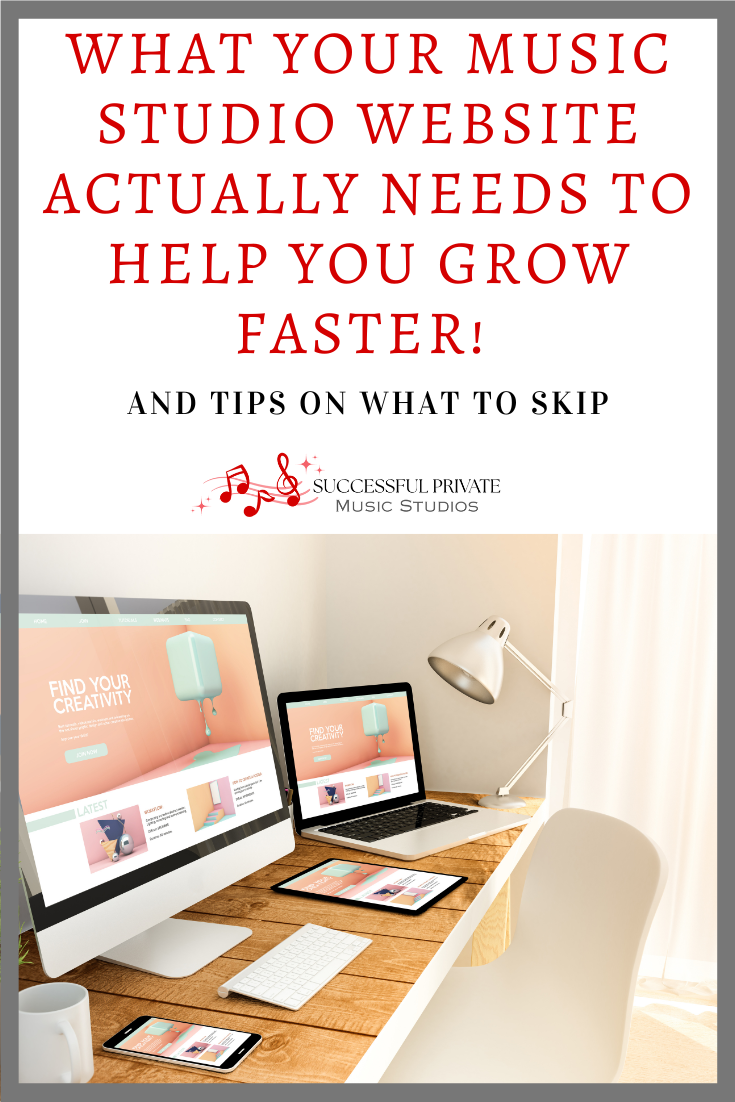
At some point between deciding to open your studio and actually getting students through the door, someone tells you that you need a website. So you build one — or you pay someone to build one — and you throw everything on it. Your degrees, your resume, a photo gallery, a blog, a contact form, a calendar, a YouTube video, a list of policies, a pricing page, and a button to buy a gift card.
And then you wonder why inquiries are slow.
Here's the thing: more pages does not mean more trust. A cluttered, unfocused website actually works against you — it makes families feel like they have to do homework just to figure out whether you're a good fit. Most of them won't bother. They'll click away and find someone whose site is easier to understand.
Your website has one job: to take a parent from "I found this teacher" to "I want to contact her" as quickly and clearly as possible. Everything on the site either supports that job or distracts from it.
Here's what actually belongs on a private music studio website — and what you can leave off entirely.
The 5 Pages Your Studio Website Needs
1. A Homepage That Answers the First Three Questions
A parent landing on your homepage for the first time has three questions in their head before they even realize it:
Is this person in my area?
Do they teach what my child wants to learn?
Do they seem like someone I'd want to work with?
Your homepage needs to answer all three — fast. That means your very first section should include: your instruments, your location (or "online lessons available"), and a brief statement that communicates your personality or approach. Not a lengthy welcome speech. One or two sentences that feel like you.
Below that, you need a clear call to action — a button or link that says something like "Learn More" or "Contact Me to Enroll." Don't make parents hunt for how to reach you.
Everything else on the homepage (photos, testimonials, a quick look at what's included, a short bio blurb) supports those three answers. It doesn't replace them.
2. A Lessons Page That Explains What You Offer
This is where parents get the details: what instruments you teach, what ages and levels you work with, lesson length options, and your general schedule or availability. You don't have to list every single slot — just enough that they understand what a lesson with you looks like.
If you have a pricing range or a starting rate, include it here. Many teachers are afraid to list their rates, but hiding them often backfires. Parents who can't find your pricing frequently assume the worst — or just move on to someone who's more upfront. You don't have to list every tier. "Piano lessons starting at $X/month" is enough.
This page should also include a call to action at the bottom. Every page on your site should make it easy to take the next step.
3. An About Page That Sounds Like a Person
This is your bio — and it's more important than most teachers realize. (I wrote an entire post on how to write this well, which you can find here.)
The short version: your About page should feel like a real conversation, not a resume. Credentials matter — but they're not what makes parents choose you. Your teaching philosophy, your personality, and your clarity about who you work with best are what make the difference.
Include a good photo. This is non-negotiable. Parents want to see who their child will be spending 30–60 minutes with every week. A clean, friendly photo — not a performance headshot, not a grainy selfie — makes a real difference in how professional and approachable your studio feels.
4. A Contact Page That Is Extremely Easy to Use
Your contact page should have: a simple form (name, email, and a message box), your email address (for parents who prefer direct email), and ideally your general location — city and state, at minimum — so families know you're within driving distance before they reach out.
That's it. You don't need a phone number unless you actually want parents calling you. You don't need your full address unless you have a physical studio location and want families to find it easily.
One thing to check: make sure your contact form actually works and that the messages reach your inbox. Test it. You'd be surprised how many teachers are losing inquiries because their contact form is broken and they don't know it.
5. A Studio Policies Page (Or a FAQ)
This is where you answer the questions parents always ask before they enroll: How do cancellations work? When is tuition due? Do you offer makeup lessons? What do students need to bring?
You don't have to post your full studio policy document here. A clean FAQ format works well — short questions, clear answers. The goal is to help parents feel informed and reduce the amount of back-and-forth before the first lesson.
If you don't have a solid studio policy written yet, that's worth addressing before you build this page.
Don't Have a Studio Policy Yet?
Studio Policy Templates — Basic & Advanced
Done-for-you policy templates built for private music teachers. Covers tuition, cancellations, makeups, scheduling, communication, and more. Includes a tutorial video and works in Word and Mac Pages. Just customize and hand it to your first family.
What Your Homepage Actually Needs to Say
I want to spend a little more time on the homepage because it's the most visited page on your site — and the most commonly done wrong.
The single most important thing on your homepage is clarity about who you are and what you offer. Not a beautiful banner image. Not an animated slideshow. Not a philosophical statement about the transformative power of music. Those things are fine as supporting elements, but they don't replace a clear, direct answer to "what is this studio and should I care?"
Think about it from the parent's perspective: they've probably Googled "piano teacher near me" or found you through a referral. They land on your page. In ten seconds or less, they need to know: instruments, location, who you work with, and that you seem like a real, trustworthy person. If your homepage doesn't deliver all four of those things quickly, you're losing people before they even get to your About page.
A few small things that make a big difference:
A real photo of you. Not a stock photo of a piano. Not your logo. You. Smiling. In a place that looks like your studio or somewhere professional. Parents are entrusting you with their child — they want to see a face.
Social proof near the top. If you have a testimonial or two from current families, put one near the top of the homepage. Even a single short quote from a happy parent does more for trust than a full paragraph about your credentials.
A button that's hard to miss. "Contact Me," "Inquire Now," or "Check Availability" — whatever language fits your studio. Make it a button, not a text link. Make it a color that stands out. Put it somewhere in the first section of the page, and again at the bottom.
New to Studio Life? Start Here.
Music Studio Startup Toolkit
A 65-page guided workbook covering your business plan, pricing, branding, website essentials, and a complete 30-day launch roadmap. Everything a new teacher needs to build a professional studio from the ground up — in one place, at one price.
$50 one-time · instant download
Get the Toolkit →What You Can Leave Off (At Least for Now)
A blog — Blogs are great for SEO and for building authority over time, but they are not essential when you're first launching. An empty or rarely updated blog actually hurts more than it helps — it signals that the site is neglected. Start a blog only when you can commit to adding to it consistently.
A full photo gallery — A handful of great photos scattered through the site is better than a dedicated gallery page. If you don't have professional studio photos yet, one good headshot and maybe a photo of your piano or music space is enough.
An online scheduling calendar — This can be useful later, but it adds complexity early on and can overwhelm parents who are just trying to find out if you have any openings. A simple contact form works fine when you're building your studio. Add scheduling tools once you're at capacity and managing a waitlist.
A lengthy biography — Your full bio lives on your About page. Your homepage needs a short, human intro — three to five sentences at most. The detailed version is one click away.
Social media feeds embedded on your site — These are visually noisy, often slow down page loading, and frequently pull in old or off-brand content. Link to your social profiles instead — a simple icon in the footer is all you need.
One Final Check Before You Publish
Before you send anyone to your website, run through this quick checklist:
Does the homepage answer: what instruments, what location, and what kind of teacher in the first few seconds?
Is there a clear, visible way to contact you on every page?
Does your About page include a real photo of you?
Does your site look and feel consistent with the rest of your branding (colors, fonts, tone)?
Does your contact form actually work? (Test it from a different email address.)
Is the site readable on a phone? Most parents will find you on mobile first.
If you can say yes to all six, you have a website that's ready to do its job.
It doesn't need to be perfect. It needs to be clear, professional, and easy to navigate. Start there — and improve it as you go.
Happy Teaching!
Becky
How to Keep Music Students Coming Back Year After Year
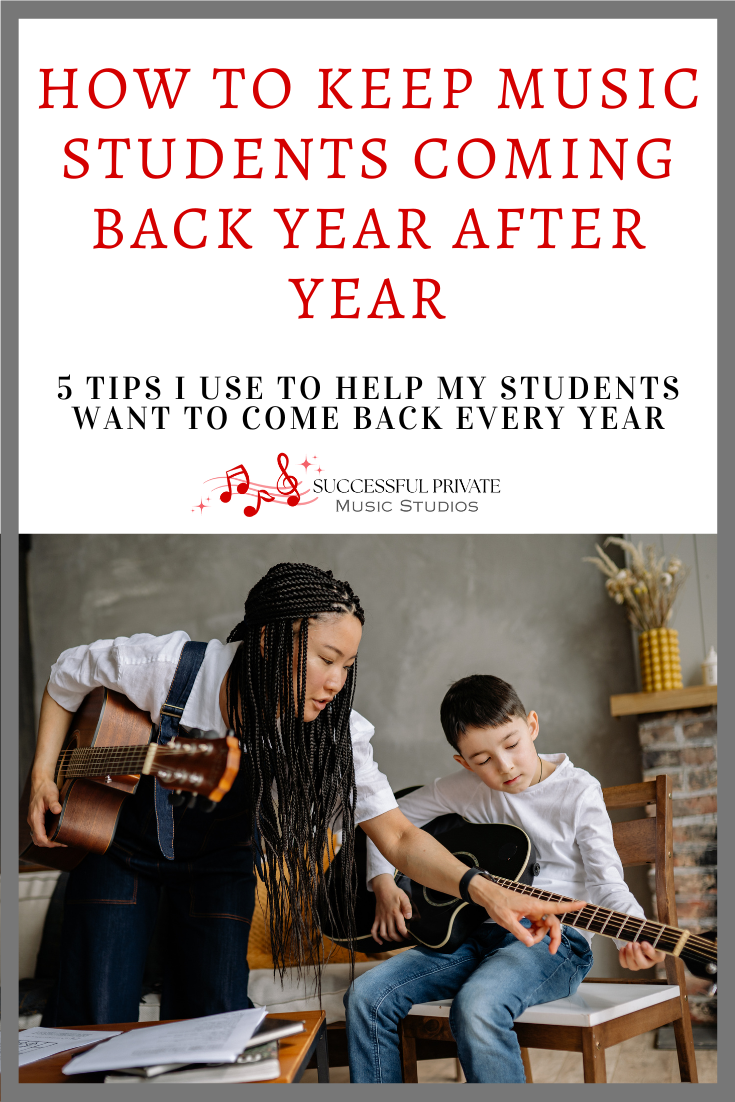
Here's a truth that took me a while to fully accept: a student who quits isn't always a student who didn't like music. Sometimes they quit because they didn't feel connected — to the lessons, to their progress, or to you as their teacher.
Retention isn't just about being a good teacher. It's about building a studio experience that students and families don't want to leave. After nearly 30 years of teaching, here's what I've learned actually makes the difference.
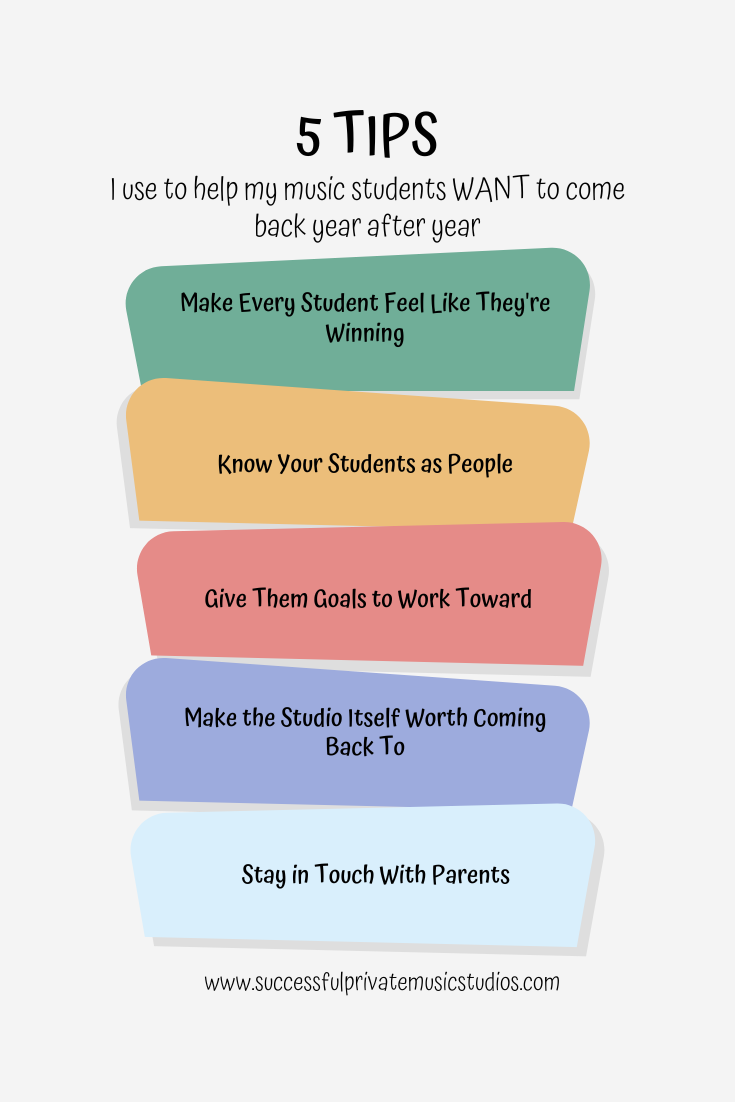
Make Every Student Feel Like They're Winning
Students who feel successful keep coming back. Students who feel like they're always behind eventually stop showing up.
This doesn't mean lowering your standards — it means being intentional about how you frame progress. Even in a lesson where nothing went perfectly, find the one thing that got better and name it. "Your left hand was so much steadier today than last week." That moment of recognition sticks. It's what they tell their parents on the way home.
Younger students especially need to feel a win at every single lesson. Build your lesson structure so they always end on something they can do well — not something they're still struggling with.
Know Your Students as People
Ask about their week. Remember that they had a soccer tournament. Notice when they seem off and give them a little grace. Students stay with teachers they feel seen by — not just instructed by.
This is one of the easiest things to do and one of the most overlooked. You don't need to be their therapist or their best friend. You just need to be a person who pays attention. That alone sets you apart from most teachers they'll ever have.
Build Your Studio Foundation
Music Studio Startup Toolkit
New to studio ownership? The Startup Toolkit covers your business plan, pricing, studio policy basics, branding, and a full 30-day launch roadmap — 65 pages built for teachers who want to start strong and stay organized from day one.
$50 one-time · instant download
Get the Toolkit →Give Them Goals to Work Toward
Students who are working toward something specific practice more and quit less. It doesn't have to be a big competition or a formal audition — it can be as simple as "let's get this piece performance-ready by the recital" or "your goal this month is to play your scales hands together without stopping."
Write the goal down. Put it in their assignment book. Check in on it the following week. That small layer of accountability creates a sense of forward momentum that keeps lessons feeling purposeful instead of repetitive.
Make the Studio Itself Worth Coming Back To
I've said it before and I'll keep saying it: the candy bowl works. So does decorating for holidays. So does the Halloween week lesson and the Christmas ornament gift and the sticker chart with the prize box. These things seem small, but they create a studio culture that students genuinely look forward to.
Your lesson room should feel like a place — not just a transaction. When students walk in and feel something, they come back.
Stay in Touch With Parents
The families most likely to quietly disappear are the ones who feel out of the loop. A short monthly email, a quick progress note at the end of a lesson, a heads-up before recital season — these touchpoints remind parents that you're invested in their child's growth, not just filling a time slot.
You don't need to over-communicate. You just need to communicate enough that parents feel informed and connected. When they feel like partners in the process, they keep their kids enrolled.
Want the Complete System?
Successful Music Studio Strategies — Signature Course
Student retention, parent communication, curriculum planning, recitals, income growth — all of it, in 59 lessons. This is the deep-dive resource for teachers who are ready to build a studio that truly thrives year after year.
$1,250 or 3 payments of $500
Learn More →Retention isn't a mystery. It's a collection of small, consistent choices that add up to a studio experience families don't want to give up. Start with one thing on this list and build from there.
Happy Teaching!
Becky
What do you want to tackle next?
Here are the best next steps depending on where you are right now.


I’m Becky and Welcome To Successful Music Studio Strategies where I help you create your own Successful Private Music Studio business through simple strategies I’ve learned and used in my own successful private music studio! Want to learn more about my online courses to help you start, build and create a successful and THRIVING music studio? Click here!