

Post Categories: What do you need help with?
Starting Your Studio
Keep Your Studio Running
Making Your Studio Thrive
Launch Your Dream Music Studio: Introducing Successful Music Studio Strategies

Are you ready to turn your passion for music into a thriving, rewarding business? I’m thrilled to announce the launch of my brand-new online course, Successful Music Studio Strategies—a comprehensive online program designed to give you all the tools you need to build, run, and grow your own private music studio!
LAUNCHING APRIL 17!
When I first started my studio journey, I had no idea where to begin. Like many teachers, I felt overwhelmed by all the moving parts—business licenses, studio policies, and even figuring out how much to charge! I pieced things together through trial and error, learning what worked and refining my process over the years. Now, my studio is thriving, and I’m sharing everything I’ve learned to help you skip the guesswork and hit the ground running.
This course is unlike anything out there, and it’s packed with all the resources and strategies I wish I’d had when I was just starting out. Here’s how we’ll make it happen:
What’s Inside the Course
The course is divided into three parts to guide you every step of the way, whether you’re opening your studio doors for the first time or looking to expand an established business:
Part 1: Getting Your Music Studio Started Learn how to develop a strong business foundation with lessons on creating your business model, setting strategic tuition, branding, and marketing.
Part 2: Keeping Your Music Studio Running Streamline your operations with tips on bookkeeping, student retention, and managing the day-to-day challenges of running a studio.
Part 3: Making Your Music Studio Thrive Take your studio to the next level with creative strategies for hosting recitals, expanding your offerings, and increasing your income streams.
Each part includes 18 video lessons, step-by-step guidance, and customizable templates to help you organize and grow your studio with confidence. Whether you’re just starting out or already have a studio, this course is designed to save you time, increase your efficiency, and elevate your success.
Why This Course is Different
This isn’t just another business course—it’s tailored specifically for music teachers like you. From setting up your first policies to building an online presence and exploring exciting growth opportunities, Successful Music Studio Strategies empowers you to create a studio that inspires students and stands out in your community.
My personal goal when I started was to enroll 10 students within 90 days. Within those first few months, I had 22! Now, I want to help you surpass your own expectations and build a studio that thrives.
Get Started SOON!
I’ve poured years of experience into this course, and I’m so excited to finally share it with you. Whether you’re a new teacher or a seasoned pro, this is your chance to level up your studio and make your dream a reality.
Ready to join the journey? SEND ME AN EMAIL NOW and take the first step toward building a music studio that you and your students will love.
Happy Teaching!
What Your Music Studio Website Actually Needs (And What to Skip)
At some point between deciding to open your studio and actually getting students through the door, someone tells you that you need a website. So you build one — or you pay someone to build one — and you throw everything on it. Your degrees, your resume, a photo gallery, a blog, a contact form, a calendar, a YouTube video, a list of policies, a pricing page, and a button to buy a gift card.
And then you wonder why inquiries are slow.
Here's the thing: more pages does not mean more trust. A cluttered, unfocused website actually works against you — it makes families feel like they have to do homework just to figure out whether you're a good fit. Most of them won't bother. They'll click away and find someone whose site is easier to understand.
Your website has one job: to take a parent from "I found this teacher" to "I want to contact her" as quickly and clearly as possible. Everything on the site either supports that job or distracts from it.
Here's what actually belongs on a private music studio website — and what you can leave off entirely.
The 5 Pages Your Studio Website Needs
1. A Homepage That Answers the First Three Questions
A parent landing on your homepage for the first time has three questions in their head before they even realize it:
Is this person in my area?
Do they teach what my child wants to learn?
Do they seem like someone I'd want to work with?
Your homepage needs to answer all three — fast. That means your very first section should include: your instruments, your location (or "online lessons available"), and a brief statement that communicates your personality or approach. Not a lengthy welcome speech. One or two sentences that feel like you.
Below that, you need a clear call to action — a button or link that says something like "Learn More" or "Contact Me to Enroll." Don't make parents hunt for how to reach you.
Everything else on the homepage (photos, testimonials, a quick look at what's included, a short bio blurb) supports those three answers. It doesn't replace them.
2. A Lessons Page That Explains What You Offer
This is where parents get the details: what instruments you teach, what ages and levels you work with, lesson length options, and your general schedule or availability. You don't have to list every single slot — just enough that they understand what a lesson with you looks like.
If you have a pricing range or a starting rate, include it here. Many teachers are afraid to list their rates, but hiding them often backfires. Parents who can't find your pricing frequently assume the worst — or just move on to someone who's more upfront. You don't have to list every tier. "Piano lessons starting at $X/month" is enough.
This page should also include a call to action at the bottom. Every page on your site should make it easy to take the next step.
3. An About Page That Sounds Like a Person
This is your bio — and it's more important than most teachers realize. (I wrote an entire post on how to write this well, which you can find here.)
The short version: your About page should feel like a real conversation, not a resume. Credentials matter — but they're not what makes parents choose you. Your teaching philosophy, your personality, and your clarity about who you work with best are what make the difference.
Include a good photo. This is non-negotiable. Parents want to see who their child will be spending 30–60 minutes with every week. A clean, friendly photo — not a performance headshot, not a grainy selfie — makes a real difference in how professional and approachable your studio feels.
4. A Contact Page That Is Extremely Easy to Use
Your contact page should have: a simple form (name, email, and a message box), your email address (for parents who prefer direct email), and ideally your general location — city and state, at minimum — so families know you're within driving distance before they reach out.
That's it. You don't need a phone number unless you actually want parents calling you. You don't need your full address unless you have a physical studio location and want families to find it easily.
One thing to check: make sure your contact form actually works and that the messages reach your inbox. Test it. You'd be surprised how many teachers are losing inquiries because their contact form is broken and they don't know it.
5. A Studio Policies Page (Or a FAQ)
This is where you answer the questions parents always ask before they enroll: How do cancellations work? When is tuition due? Do you offer makeup lessons? What do students need to bring?
You don't have to post your full studio policy document here. A clean FAQ format works well — short questions, clear answers. The goal is to help parents feel informed and reduce the amount of back-and-forth before the first lesson.
If you don't have a solid studio policy written yet, that's worth addressing before you build this page.
Don't Have a Studio Policy Yet?
Studio Policy Templates — Basic & Advanced
Done-for-you policy templates built for private music teachers. Covers tuition, cancellations, makeups, scheduling, communication, and more. Includes a tutorial video and works in Word and Mac Pages. Just customize and hand it to your first family.
What Your Homepage Actually Needs to Say
I want to spend a little more time on the homepage because it's the most visited page on your site — and the most commonly done wrong.
The single most important thing on your homepage is clarity about who you are and what you offer. Not a beautiful banner image. Not an animated slideshow. Not a philosophical statement about the transformative power of music. Those things are fine as supporting elements, but they don't replace a clear, direct answer to "what is this studio and should I care?"
Think about it from the parent's perspective: they've probably Googled "piano teacher near me" or found you through a referral. They land on your page. In ten seconds or less, they need to know: instruments, location, who you work with, and that you seem like a real, trustworthy person. If your homepage doesn't deliver all four of those things quickly, you're losing people before they even get to your About page.
A few small things that make a big difference:
A real photo of you. Not a stock photo of a piano. Not your logo. You. Smiling. In a place that looks like your studio or somewhere professional. Parents are entrusting you with their child — they want to see a face.
Social proof near the top. If you have a testimonial or two from current families, put one near the top of the homepage. Even a single short quote from a happy parent does more for trust than a full paragraph about your credentials.
A button that's hard to miss. "Contact Me," "Inquire Now," or "Check Availability" — whatever language fits your studio. Make it a button, not a text link. Make it a color that stands out. Put it somewhere in the first section of the page, and again at the bottom.
New to Studio Life? Start Here.
Music Studio Startup Toolkit
A 65-page guided workbook covering your business plan, pricing, branding, website essentials, and a complete 30-day launch roadmap. Everything a new teacher needs to build a professional studio from the ground up — in one place, at one price.
$50 one-time · instant download
Get the Toolkit →What You Can Leave Off (At Least for Now)
A blog — Blogs are great for SEO and for building authority over time, but they are not essential when you're first launching. An empty or rarely updated blog actually hurts more than it helps — it signals that the site is neglected. Start a blog only when you can commit to adding to it consistently.
A full photo gallery — A handful of great photos scattered through the site is better than a dedicated gallery page. If you don't have professional studio photos yet, one good headshot and maybe a photo of your piano or music space is enough.
An online scheduling calendar — This can be useful later, but it adds complexity early on and can overwhelm parents who are just trying to find out if you have any openings. A simple contact form works fine when you're building your studio. Add scheduling tools once you're at capacity and managing a waitlist.
A lengthy biography — Your full bio lives on your About page. Your homepage needs a short, human intro — three to five sentences at most. The detailed version is one click away.
Social media feeds embedded on your site — These are visually noisy, often slow down page loading, and frequently pull in old or off-brand content. Link to your social profiles instead — a simple icon in the footer is all you need.
One Final Check Before You Publish
Before you send anyone to your website, run through this quick checklist:
Does the homepage answer: what instruments, what location, and what kind of teacher in the first few seconds?
Is there a clear, visible way to contact you on every page?
Does your About page include a real photo of you?
Does your site look and feel consistent with the rest of your branding (colors, fonts, tone)?
Does your contact form actually work? (Test it from a different email address.)
Is the site readable on a phone? Most parents will find you on mobile first.
If you can say yes to all six, you have a website that's ready to do its job.
It doesn't need to be perfect. It needs to be clear, professional, and easy to navigate. Start there — and improve it as you go.
Happy Teaching!
Becky
How to Keep Music Students Coming Back Year After Year
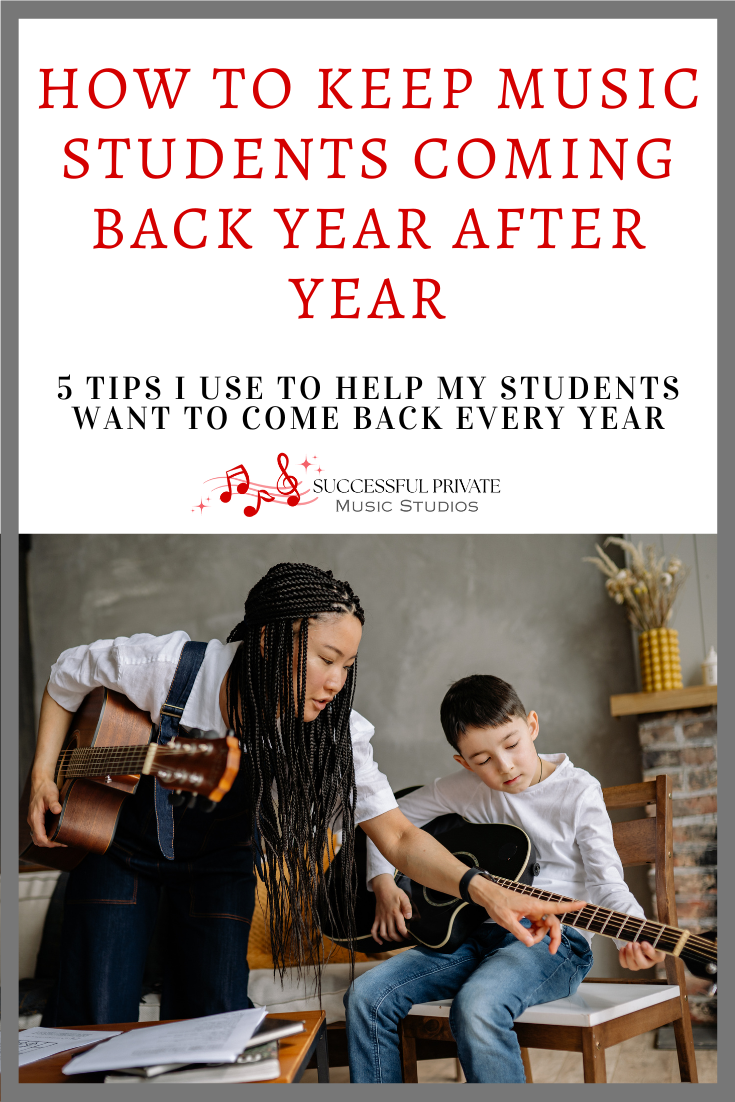
Here's a truth that took me a while to fully accept: a student who quits isn't always a student who didn't like music. Sometimes they quit because they didn't feel connected — to the lessons, to their progress, or to you as their teacher.
Retention isn't just about being a good teacher. It's about building a studio experience that students and families don't want to leave. After nearly 30 years of teaching, here's what I've learned actually makes the difference.
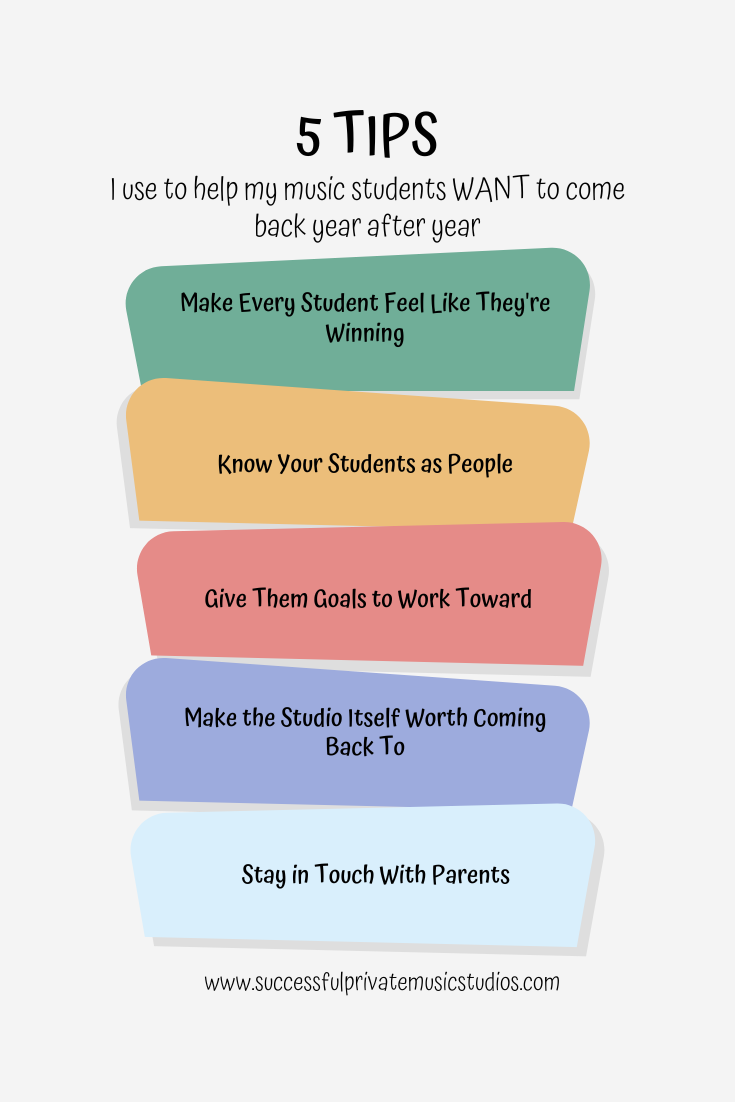
Make Every Student Feel Like They're Winning
Students who feel successful keep coming back. Students who feel like they're always behind eventually stop showing up.
This doesn't mean lowering your standards — it means being intentional about how you frame progress. Even in a lesson where nothing went perfectly, find the one thing that got better and name it. "Your left hand was so much steadier today than last week." That moment of recognition sticks. It's what they tell their parents on the way home.
Younger students especially need to feel a win at every single lesson. Build your lesson structure so they always end on something they can do well — not something they're still struggling with.
Know Your Students as People
Ask about their week. Remember that they had a soccer tournament. Notice when they seem off and give them a little grace. Students stay with teachers they feel seen by — not just instructed by.
This is one of the easiest things to do and one of the most overlooked. You don't need to be their therapist or their best friend. You just need to be a person who pays attention. That alone sets you apart from most teachers they'll ever have.
Build Your Studio Foundation
Music Studio Startup Toolkit
New to studio ownership? The Startup Toolkit covers your business plan, pricing, studio policy basics, branding, and a full 30-day launch roadmap — 65 pages built for teachers who want to start strong and stay organized from day one.
$50 one-time · instant download
Get the Toolkit →Give Them Goals to Work Toward
Students who are working toward something specific practice more and quit less. It doesn't have to be a big competition or a formal audition — it can be as simple as "let's get this piece performance-ready by the recital" or "your goal this month is to play your scales hands together without stopping."
Write the goal down. Put it in their assignment book. Check in on it the following week. That small layer of accountability creates a sense of forward momentum that keeps lessons feeling purposeful instead of repetitive.
Make the Studio Itself Worth Coming Back To
I've said it before and I'll keep saying it: the candy bowl works. So does decorating for holidays. So does the Halloween week lesson and the Christmas ornament gift and the sticker chart with the prize box. These things seem small, but they create a studio culture that students genuinely look forward to.
Your lesson room should feel like a place — not just a transaction. When students walk in and feel something, they come back.
Stay in Touch With Parents
The families most likely to quietly disappear are the ones who feel out of the loop. A short monthly email, a quick progress note at the end of a lesson, a heads-up before recital season — these touchpoints remind parents that you're invested in their child's growth, not just filling a time slot.
You don't need to over-communicate. You just need to communicate enough that parents feel informed and connected. When they feel like partners in the process, they keep their kids enrolled.
Want the Complete System?
Successful Music Studio Strategies — Signature Course
Student retention, parent communication, curriculum planning, recitals, income growth — all of it, in 59 lessons. This is the deep-dive resource for teachers who are ready to build a studio that truly thrives year after year.
$1,250 or 3 payments of $500
Learn More →Retention isn't a mystery. It's a collection of small, consistent choices that add up to a studio experience families don't want to give up. Start with one thing on this list and build from there.
Happy Teaching!
Becky
What do you want to tackle next?
Here are the best next steps depending on where you are right now.
Practice with Purpose: Creative Ways to Motivate and Engage Your Music Students

Practicing is the cornerstone of musical progress, but let’s face it: keeping students motivated to practice can sometimes feel like an uphill battle. As educators, it’s our job to make practicing not only effective but also fun and engaging. When students practice with purpose and enthusiasm, they make meaningful progress while developing a lifelong love for music. Let’s explore some creative ways to incentivize practice and keep your students inspired!
1. Gamify the Practice Experience
Transform practice into a game to keep it exciting and rewarding:
Practice Challenges: Create weekly or monthly challenges, like mastering a tricky passage or playing a piece flawlessly three times in a row. Offer small rewards, like stickers, certificates, or even virtual badges.
Progress Charts: Use charts or apps where students can track their practice time or accomplishments. Seeing their progress visually can be highly motivating.
Practice Bingo: Design a bingo card with different practice tasks (e.g., “Play with perfect dynamics” or “Practice for 20 minutes without stopping”). Completing a bingo earns students a reward.
It’s not too late to get access to the Spring 2026 DONE FOR YOU Practice Challenge with the Practice To Performance Challenge Kit! Get it blow or learn more HERE
2. Personalize the Journey
Every student is unique, so tailor their practice experience to match their interests and goals:
Repertoire Selection: Choose pieces that resonate with their musical tastes or connect to their favorite artists. Personal passion fuels motivation.
Creative Assignments: Encourage them to compose their own short pieces or create variations on a song they love.
Student-Driven Goals: Let them set their own practice goals, whether it’s learning a specific piece, mastering a technique, or preparing for a performance.
3. Incorporate Technology
Leverage digital tools to modernize and enhance the practice experience:
Apps for Practice: Apps like Tonara, Piano Maestro, or Simply Piano make practice interactive and fun by providing feedback, tracking progress, and offering rewards.
Recording Sessions: Have students record themselves during practice. Listening back not only helps them identify areas for improvement but also lets them celebrate how far they’ve come.
Virtual Duets: Pair students with you or other students for online collaborative performances. Technology allows for creative engagement, even outside the lesson room.
4. Celebrate Achievements
Recognition can go a long way in motivating students:
Practice Awards: Hand out awards for consistency, improvement, or creative effort during practice sessions.
Showcase Talent: Create opportunities for students to share what they’ve learned. Recitals, studio showcases, or even sharing videos online can be a great way to acknowledge their progress.
Highlight Milestones: Celebrate when they reach a significant milestone, like completing a challenging piece or mastering a new technique.
5. Foster a Growth Mindset
Encourage students to view practice as an opportunity for growth rather than a chore:
Celebrate Effort, Not Just Results: Praise their dedication and improvement, even if they don’t get it perfect right away.
Teach Problem-Solving: Show them how to break down difficult sections into manageable parts. This empowers them to approach challenges with confidence.
Focus on Fun: Remind them that music is about joy and expression. A light-hearted approach helps create a positive association with practice.
6. Get Families Involved
Parents and guardians play a key role in encouraging practice:
Parent-Student Practice Sessions: Encourage parents to participate in practice time, even if it’s just as an audience.
Practice Logs: Provide logs where parents can leave encouraging notes or observations about practice sessions.
Family Recitals: Organize informal performances at home, fostering a supportive environment where students feel proud to share their progress.
Final Thoughts
Engaging students in practice doesn’t have to be a struggle. By incorporating creativity, personalization, and a sense of fun, you can transform practice into a purposeful and enjoyable part of their musical journey. Remember, the ultimate goal is to help students build a lifelong connection with music—one that inspires passion, perseverance, and joy.
Now it’s time to take these ideas and start inspiring! How will you make practicing purposeful and fun for your students today? 🎶
Happy Teaching!
Crafting the Perfect Welcome Packet for New Students: Setting the Stage for Success and Connection
First impressions matter — especially when welcoming new students into your studio. Before a family ever sits down for that first lesson, they're already forming an opinion about you. Are you organized? Are you professional? Do you know what you're doing?
A thoughtfully designed welcome packet answers all three questions before anyone has to ask.
It's not just paperwork. It's the first real experience a family has with your studio — and it sets the tone for everything that follows. When done well, a welcome packet communicates professionalism, builds trust, and makes new families feel like they made the right choice choosing you.
Here's exactly what to put in yours, and why each piece matters.
Why Every Studio Needs a Welcome Packet
Most teachers hand new students a policy sheet and call it a day. A welcome packet is something different — it's a complete, intentional first impression that does several things at once.
It establishes you as a professional. A well-prepared packet signals that you take your studio seriously. Families notice the difference between a teacher who hands them a crumpled photocopied sheet and one who sends a clean, organized, branded document. That difference affects how much they respect your time, follow your policies, and stick around long term.
It sets clear expectations from day one. The most common source of friction between teachers and families isn't personality conflicts — it's misaligned expectations. Who pays for a missed lesson? What happens if they need to cancel? When is tuition due? A welcome packet answers these questions before they become problems.
It reduces your workload. Every question your welcome packet answers is a text you don't have to respond to at 9pm. When families have a single document they can reference, you spend less time on back-and-forth communication and more time teaching.
It makes families feel valued. A personal, thoughtfully written welcome packet tells new students and parents: you matter here. That feeling of being welcomed — not just enrolled — is what turns a new student into a long-term one.
What to Include in Your Welcome Packet
1. A Personal Welcome Letter
This is the first thing families read, so make it count. Introduce yourself warmly, share your teaching philosophy in a sentence or two, and express genuine excitement about working with their student. This isn't the place for formality — it's the place for connection.
Include the practical details in the letter too: date and time of the first lesson, the address (with a hyperlink if you're sending digitally), and any first-lesson instructions like what to bring or where to park. Make it easy for them from the very first communication.
2. Your Studio Policies
This is the most important functional piece of your welcome packet. Your policies should cover:
Tuition amount, due date, and accepted payment methods
Cancellation and makeup lesson rules — your rules, stated clearly
Practice expectations for students at home
How and when to communicate with you
What happens with extended absences or withdrawals
Online lesson protocols if applicable
Write your policies in a friendly but firm tone. You're not trying to sound like a legal contract — you're trying to sound like a professional who respects both her time and her students'. Families respond well to clarity. Vague policies invite negotiation; clear ones prevent it.
3. First Tuition Summary
Include a simple summary of what's due, when it's due, and how to pay it. If you charge an enrollment or registration fee to reserve the student's spot, note that here as well. Getting the financial piece in writing from day one removes the awkwardness of bringing it up later.
4. Studio Calendar
Provide a calendar showing important dates for the current season — holidays, studio closures, recital dates, and any registration deadlines. Families who can plan ahead are families who stay enrolled. Surprises (like finding out in November that you take two weeks off at Christmas) create frustration that a simple calendar prevents entirely.
5. "How Lessons Work" Overview
A short, friendly one-pager that explains the rhythm of your studio: how long lessons are, what a typical lesson looks like, what you expect from students between sessions, and how progress is measured. This is especially helpful for families who are new to private lessons and don't know what to expect.
6. Contact Information and Communication Preferences
Be explicit about how you prefer to be reached, your typical response time, and any boundaries around after-hours messages. Setting this expectation upfront prevents the Sunday night texts asking about Tuesday's lesson.
How to Create and Format Your Welcome Packet
Digital vs. Physical
Most teachers send welcome packets digitally as a PDF — it's fast, easy to update, and eliminates printing costs. A digital packet can also include clickable links (to your calendar, your payment portal, your studio address), which makes the experience even smoother for families. That said, there's something genuinely warm about a physical packet handed to a new student on day one. Some teachers do both: a digital version sent before the first lesson, and a printed copy available at the studio.
Design matters more than you think.
Your welcome packet is a branded document. It should reflect your studio's visual identity — your colors, your logo, your fonts. A well-designed packet reinforces that you're professional and intentional. Canva is an excellent free tool for this; you can create a clean, beautiful packet in an afternoon even with no design background.
Keep it organized with clear sections and headers. Families should be able to scan it quickly and find what they need. Dense walls of text get skimmed or ignored; a clean, easy-to-read layout gets read.
Keep it current.
Review your welcome packet at the start of every new season — fall and summer are natural checkpoints. Update tuition rates, calendar dates, policy language, and contact information as needed. An outdated welcome packet creates confusion and undermines the professionalism you worked to establish.
The Welcome Packet Is Just the Beginning
A great welcome packet doesn't just onboard a new student — it starts a relationship. When families feel informed, respected, and welcomed from day one, they stick around. They refer their friends. They show up to recitals. They become the kind of studio families that make this work genuinely rewarding.
The time you invest in creating a thoughtful welcome packet pays dividends for every student who walks through your door. Do it once, do it well, and update it every season. It's one of the highest-leverage things you can do for your studio.
Happy Teaching!
Becky


I’m Becky and Welcome To Successful Music Studio Strategies where I help you create your own Successful Private Music Studio business through simple strategies I’ve learned and used in my own successful private music studio! Want to learn more about my online courses to help you start, build and create a successful and THRIVING music studio? Click here!