

Post Categories: What do you need help with?
Starting Your Studio
Keep Your Studio Running
Making Your Studio Thrive
Convert Trial Lessons into Regular Students
A simple, repeatable system to help families say “YES!” with confidence
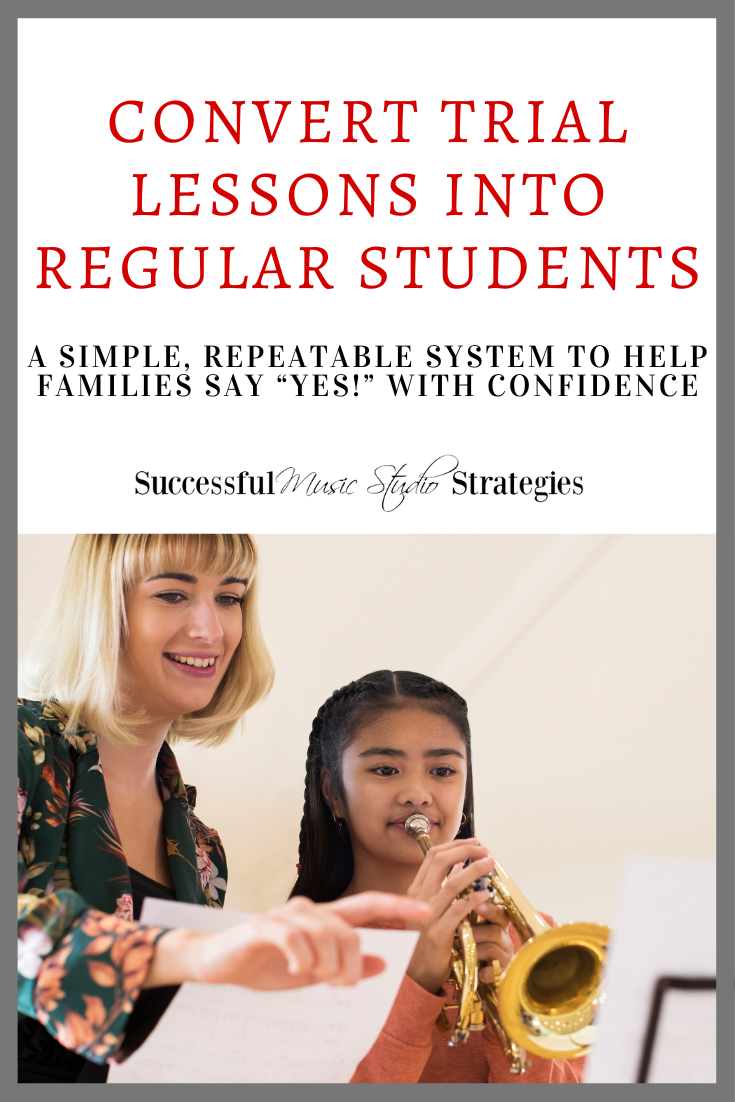
Trial lessons are one of the most powerful tools in your studio. They give families a chance to experience your teaching style, see quick progress, and understand the value of music lessons before committing. When you approach trials with clarity and intention, you turn curiosity into commitment — and build a studio full of motivated, long‑term students.
This post walks you through a three‑step system you can use at every trial lesson: a clear offer, a simple inquiry script, and a two‑week practice chart parents can use immediately.
Why Trial Lessons Matter
Parents make decisions quickly. They want to know:
• Will my child enjoy this?
• Will they learn something meaningful?
• Will this fit our schedule and budget?
A structured trial lesson answers all three questions without pressure. It shows professionalism, builds trust, and gives families a clear next step.
Tip 1: Set One Clear Trial Offer
A simple, predictable offer removes hesitation and makes it easy for parents to say yes.
What to include in your offer
• Lesson length: 30‑minute trial
• Price: fixed NOT discounted. Use your regular 30 minute lesson rate. Your time is your time regardless if it’s a trial or actual lesson.
• What they’ll learn: one warm‑up, one short piece, and a quick practice plan
• Next step: how to continue if it’s a good fit
Why this works
Parents don’t want to compare options or guess what’s included. A single, well‑defined offer feels professional and reduces decision fatigue.
Example line to use in messages or on your website:
“I offer a 30‑minute trial lesson where your child will learn a short piece and receive a two‑week practice plan.”
Tip 2: Use a Simple 3‑Step Inquiry Script
A consistent script helps you sound confident, saves time, and ensures every family gets the same warm, clear introduction.
The 3‑step script
1. Greet
“Hi, I’m [your name] — thanks so much for reaching out about lessons.”
2. Explain the trial
“Our trial is 30 minutes. We’ll warm up, learn a short piece, and I’ll send you a two‑week practice chart to get started.”
3. Confirm availability
“Which weekday afternoons work best? I have openings on Tuesday and Thursday this week.”
Why this works
It keeps the conversation short, friendly, and focused on next steps — exactly what busy parents need.
Tip 3: Give Parents a Printable Two‑Week Practice Chart
A practice chart is one of the easiest ways to show value immediately. It helps students start strong and gives parents a clear way to support progress at home.
How to use it
• Hand it out at the end of the trial
• Or email it within 24 hours
• Ask families to bring it to the next lesson
Why it works
Parents see structure. Students see progress. You look organized and intentional — which builds trust and increases enrollment.
Two‑Week Practice Chart
What to Say After the Trial (Follow‑Up Script)
Send this within 24 hours:
“Thank you for coming today! [Student name] did a great job learning the short piece. If you’d like to continue, I have weekly 30‑minute lessons available on [days/times]. I’ve attached a two‑week practice chart to help you get started. Let me know which time works best and I’ll reserve your spot.”
Why this worksIt reinforces progress, offers clear next steps, and makes scheduling easy — all without pressure.
Your Trial Lesson Checklist
Use this at every trial to stay consistent:
• Confirm the offer at the start
• Teach one quick win
• Give the practice chart
• Send the follow‑up message within 24 hours
• Offer 2–3 specific time slots
Final Thoughts
A great trial lesson isn’t about perfection — it’s about clarity, structure, and a small win that builds confidence. When families leave knowing exactly what to expect and how to continue, enrollment becomes natural and stress‑free.
Happy Teaching!
Becky
How To Easily Transition To Teaching Online Music Lessons | TOP 5 TIPS

Non-essential business have been shut down in our state for at least a month at this point and I had to make the quick decision on transitioning to online lessons. It’s actually an easy transition, technology wise! Follow these steps to continue your teaching online during this time, or open up your teaching to online lessons to be able to teach more students in general!

ZOOM is an amazing teaching site that allows you to have multiple people and devices at once and it’s FREE! Set up an account and select MEETINGS —> Schedule Meeting. Assign each student a RECURRING meeting time so that it uses a custom code for every student. Be sure to scroll down to ADVANCED, and select waiting room, so that they have a place to wait while you end one student and then start theirs. Password is optional. Then just Send them their customized link. Each week you sign into your zoom and open the meetings as they happen.
Be sure to send out a notice to all parents about what you expect during this time from being in the waiting room for lessons 5 minutes early and even advise them on no shows/late and that lessons will only be for the time allotted. If the student is late, you will not be making up the time at the end or at a later date. You, as the teacher, should not be expected to send out a text message to the parents each time they don’t show up for lessons. It’s the parent’s responsibility to remember to have their child in lesson on time.
SAMPLE LETTER:

For you as the teacher, know that teaching online is a much SLOWER process. You can not go at the speed you did when teaching face to face. It takes more listening than talking at times too.
1) You must have a copy of every book the students are using. Forego doing theory if you have to, but you will need a copy of their books plus a notebook and keep record of what you assigned them.
2) Allow the student to complete their playing then give them notes on what and where to correct then go back over. Often there is a lag and if you correct while they are playing by the time they hear your comment they could already be half a measure ahead and get confused. So listen then correct.
3) Be clear with where you are talking about, measure numbers. Older kids need to write in every measure number to make it easier. For younger students go back over how to count their measures. Be prepared to hold your music up and show them exactly.
4) If you tell them to mark something in their music, mark yours too so you know exactly what you are telling them to help them next time.
5) if you are feeling frustrated or the student is feeling frustrated, move on to the next thing, and let them know we’ll work on it again next week. This is new for you and them, and it’s a big change. Don’t let your frustration show. Often they just need a break, or will be able to pick up the concept during their practicing that week after they sit down with it.
In the end, lessons online are completely doable. Be open and honest with the parents. Check in with them each month to see how it’s working for them. Honestly having our 75 Days of practicing challenge already going has helped us stay committed to practicing during this time because they know that they will still get their prizes even with being quarantined!
Happy teaching!
Making The Jump To Accepting Online Tuition Payments | Setting up your Business Invoices on PayPal

Have you been thinking about moving moving to more online practices? From sending out Welcome Packet emails instead of through snail mail, or monthly tuition emails, or even start accepting online payments for tuition online.
I recently l made the switch to accept payments via PayPal and let me tell you, IT HAS BEEN AMAZING! No more awkward face to face “I haven’t received tuition for the month” conversations because you can just send a “REMINDER” through PayPal. Plus you can create a template for invoices and all you do is plug in the address of who it’s to, amount, and I include a copy of the lesson summary I make as well, set a due by date and off it goes! And I’m getting all my student’s tuitions paid on time, easily!
Plus with the REPORTS it made our taxes so easy because it separated out income, outcome and even our fees, yes fees, a portion of your income will be used to pay PayPal, but you can take that information to your tax expert to have them enter it into your taxes and deductions.
Let me walk you through.
First you must set it up as a business account, because you are running a business.
Once it’s set up as a business you can set up your invoices. Click CREATE INVOICE in the left sidebar or under the drop down list of TOOLS—> Invoices—>Create Invoice.
Add your logo and business information. And save as template. I personally use the Amount only template.
Add reference information (i.e. May Tuition)
Add due date
TYPE: Services
BILL TO: Add your students information, and once you enter it once you just have to pull their info from the address book and you are good to go!
For the description portion I only use Description and Amount. That’s it look at my example below:

Then ATTACH FILE: This is where I attach my official lesson summary PDF for the individual student.
Preview, and if everything looks okay, SEND!
Also with the new Paypal.me option for those parents that still prefer to pay by check and I’m sending their monthly lesson summary via email, I have been including a link option to my paypal.me page as an option for them to just click the link and pay or still pay by check. But they have an easy option to pay online without having an invoice pre made for them.
I’ve been loving the simplicity of receiving the tuition online, and the whole process is documented easily and done!
Happy Teaching!
xo, Becky
The Ultimate Guide to Starting a Successful Music Studio Business: Top Tips and Tricks for Aspiring Entrepreneurs

Are you an aspiring entrepreneur looking to start a successful music studio business? Look no further, because I have compiled the ultimate guide for you!
One of the first things you'll need is a well-designed website, but don't worry if you're not tech-savvy. You can find easy to follow websites like webs.com to help you get started quickly and easy. This is the easiest way to get word of mouth out there via Facebook or Instagram to be able to link back to your site for the potential student family to learn more about you. You can view my website www.beckysmusicstudio.com to get an idea of how you can set up your site.
Next, consider what services you'll offer. Private music lessons are always in demand, but how do you stand out from the competition? (you can check out this post here for some times I share on standing out from the competition) One way is to create a welcoming and comfortable atmosphere in your music studio.
Additionally, you can offer unique services, like songwriting workshops, music theory workshops or recording sessions, to attract more customers.
Marketing your business is also crucial for success. Social media platforms like Instagram and Facebook are great for promoting your music studio and engaging with potential customers. You can also offer promotions, like free trial lessons or referral discounts, to entice new clients. But the key is to TALK ABOUT YOUR BUSINESS!
Starting a music studio business can be challenging, but by following these top tips and tricks, you can increase your chances of success. With hard work and dedication, your music studio can become the go-to place for aspiring musicians in your community! If you want more help in getting your studio started, don’t forget to check out our mini courses, build your own ironclad policy with our customizable and DONE FOR YOUR Studio Policy Template or our Bookkeeping Powerhouse course to help you keep track of the backend of your business!
Happy Teaching!
Turn Your Fun Habit Into A Side Hustle or Business

I perform on the French Horn with our local symphonic band in our town. It’s a great way for me to continue my education in band music but also develop my talents and perform regularly. It’s an 80 piece ensemble filled with so many talented musicians. We are all adults and have other things we do during the week. But, a majority of the people in the band, don’t teach lessons, or have never taught lessons. I get it. Not every one wants to be a teacher, but when I talk to some of the musicians and they are either retired, in between jobs, or struggling to like their current job, or just looking for something more to do with their life (hello stay at home moms!), the first t thing I asked them was, “have you thought about teaching?” Most of them think I’m crazy, but honestly, we need more teachers out there.
Have you ever thought about teaching? It’s a great way to add a little supplemental income or if you are wanting to go in full time, you can make it work. The key though…START! Here’s some secrets to get you started!
1) Decide what levels you feel comfortable teaching through. Most anyone with an intermediate based or higher piano skill can teach beginning piano.
2) Decide what books you plan to use. I personally have been using the Faber & Faber Piano Adventures. But my son, who is with another piano teacher uses the Piano Town books.
3) Decide how many days you want to teach and the time available that you can and that will determine how many students you can teach. If you can teach 2 days a week for 2 hours each day, that’s 4 students with 30 minute lessons! (If your lessons are between $80-$100 / month then that’s an extra $320-$400, teaching just 4 hours a week.)
4) You don’t have to teach from your house, you can be a traveling teacher (plan time between lessons to drive to the next location.) Or rent a space at a local music store or check with other venues that might be available like in a church or other spaces.
5) Place up some advertisement at local stores or talk to friends to spread the word. Then get teaching.
🌟 Create a professional atmosphere from the start with one of our ironclad Music Studio Policies where we go over tuition costs, and how to answer all the questions a parent will have before they start working with you and make sure you have all the backend bookkeeping tools and templates to help you stay organized in your new business with our Bookkeeping Powerhouse Kit.
In the end, you won’t know unless you try! And if you feel like, “man, I just need more help getting this started”…my Successful Private Music Studios Strategies 12 Week Online Course is going to be your answer! Coming soon!! So make sure you get on our mailing list because everything you need to build, grow, run, and create a successful and THRIVING private music studio is INCLUDED in the course!
Happy Teaching,
xo Becky


I’m Becky and Welcome To Successful Music Studio Strategies where I help you create your own Successful Private Music Studio business through simple strategies I’ve learned and used in my own successful private music studio! Want to learn more about my online courses to help you start, build and create a successful and THRIVING music studio? Click here!
Bookkeeping Powerhouse Mini course and Studio Policy Templates NOW AVAILABLE!
